Between 2014 and 2026, the Olympia Historical Society and Bigelow House Museum selected and captioned Olympia-area images for the Sunday Olympian. This page features those images and may include additional information about them. You can use the Search button on our menu banner to search for specific photographs and subjects, or go to our Visual Resources dropdown menu.
Looking Back’s theme for 2026 is Downtown by the Decades. In 1979, civic organizations and the City retained a national organization known as R/UDAT to come up with a vision for the revitalization of downtown Olympia. One recommendation was the development of a performing arts center. In 1984 the Washington Center for the Performing Arts, shown here under construction in 1983, was dedicated and remains a central element of the downtown arts scene.
Olympia Planning Commission archives, Washington State Archives
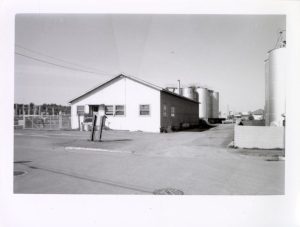
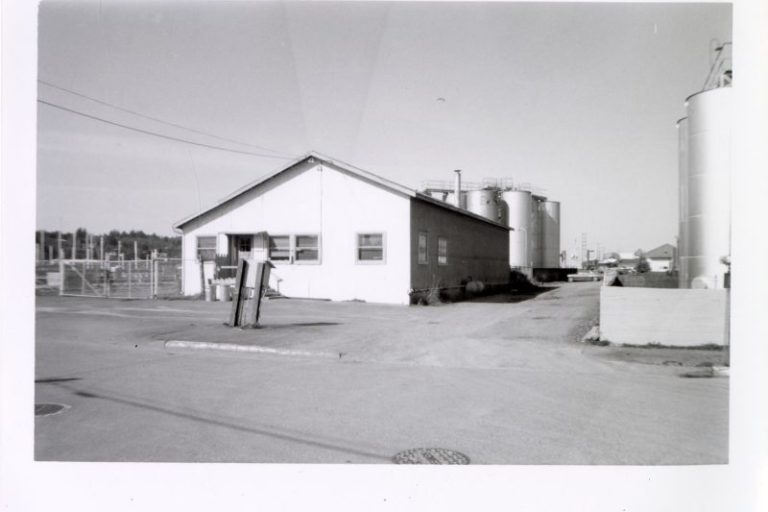
Looking Back’s theme for 2026 is Downtown by the Decades. From the 1930s to late 1970s, the Port of Olympia hosted an array of large tanks to store oil offloaded from ships. The tanks were finally removed in the early 1980s. The structure in front of the tanks in this image from about 1979 is currently the home of Olympia Seafood on Columbia Street. Image selected and captioned by Deborah Ross on behalf of the Olympia Historical Society and Bigelow House Museum, https://olympiahistory.org.
Olympia Planning Commission archives, Washington State Archives
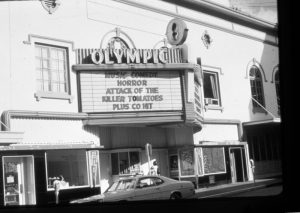
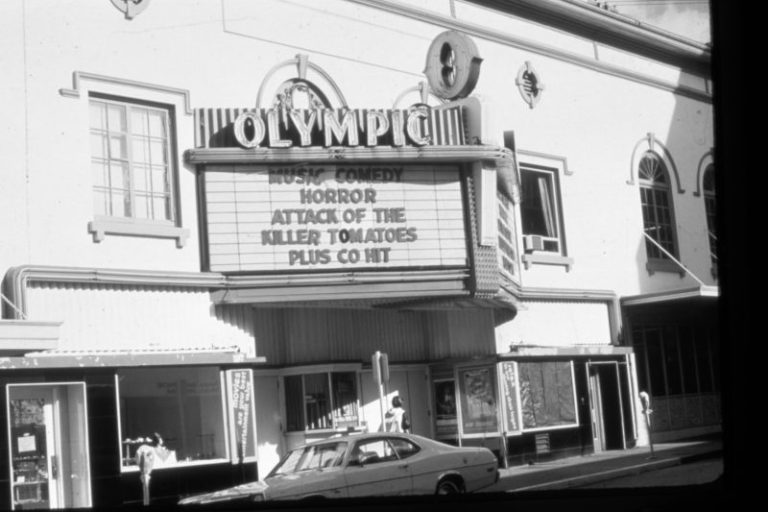
Looking Back’s theme for 2026 is Downtown by the Decades. In the 1970s, downtown Olympia had three second-run movie theaters, the Capitol, the State, and the Olympic. First-run movie showings had by then moved to the Capital Mall. Shown here in a photograph from around 1978 is the Olympic Theater on Washington Street near Legion Way (the current location of the Washington Center for the Performing Arts).
Olympia Planning Department archives, Washington State Archives
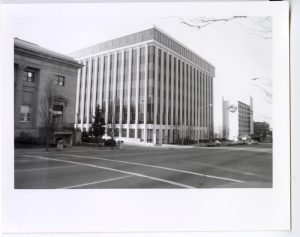
Looking Back’s theme for 2026 is Downtown by the Decades. The 1950s, 60s and 70s produced several important structures in downtown Olympia. The Evergreen Plaza building, erected in 1972, was jointly financed and constructed by several business owners who were pursuing a goal to add to commercial office space in downtown Olympia. It is considered an important addition to mid-century modern architecture downtown. Image selected and captioned by Deborah Ross on behalf of the Olympia Historical Society and Bigelow House Museum, https://olympiahistory.org.
Olympia Planning Department photograph, Washington State Archives
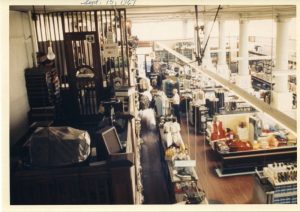
Looking Back’s theme for 2026 is Downtown by the Decades. On September 15, 1967, an era came to an end with the closing of the iconic Mottman’s Mercantile department store, located at 4th and Capitol. Shown here, in a photo taken shortly before, is the ground floor of the store, looking down from the balcony where George Mottman presided until he was well into his 80s. The building still exists. Image selected and captioned by Deborah Ross on behalf of the Olympia Historical Society and Bigelow House Museum, https://olympiahistory.org.
Mottman Collection, Olympia Historical Society and Bigelow House Museum

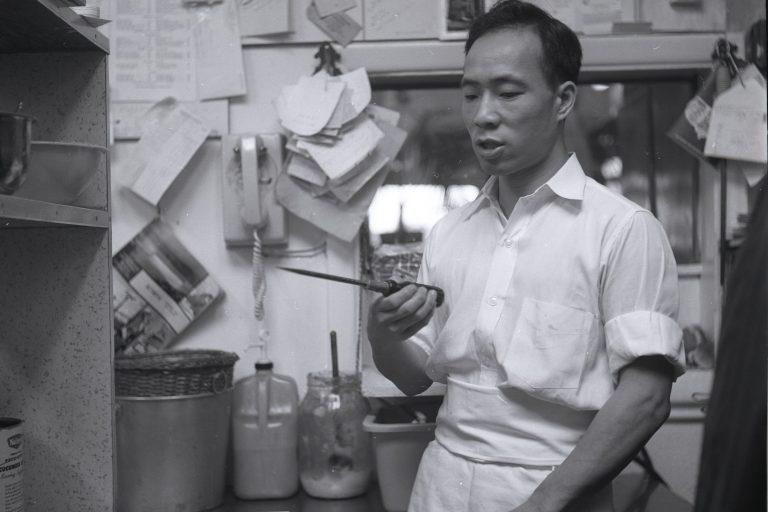
Looking Back’s theme for 2026 is Downtown by the Decades. The China Clipper, now the Clipper Cafe, is an iconic establishment in downtown Olympia. In this photograph from 1963, owner CY Wong is at work in the restaurant’s kitchen. The Clipper was one of the businesses destroyed in the Great Train Wreck of 1959, but was rebuilt within a year and continued to be a popular source of Chinese cuisine. Photograph selected and captioned by Deborah Ross on behalf of the Olympia Historical Society and Bigelow House Museum. For more information see olympiahistory.org.
Daily Olympian photo, 1963
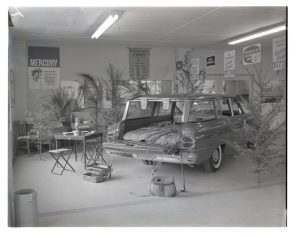
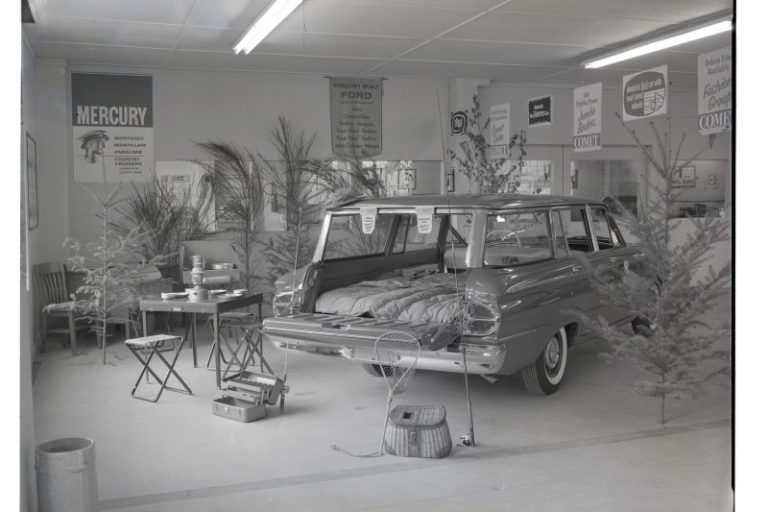
Looking Back’s theme for 2026 is Downtown by the Decades. Shown here in a photo from 1962 is a new Mercury Comet station wagon at Kearns Motor, located on Cherry Street. The name reflected the fascination with the space race. The showroom demonstrated the versatility of the wagon, with camping gear and sleeping bags on display. Image selected and captioned by Deborah Ross on behalf of the Olympia Historical Society and Bigelow House Museum, https://olympiahistory.org.
Susan Parish collection, Washington State Archives

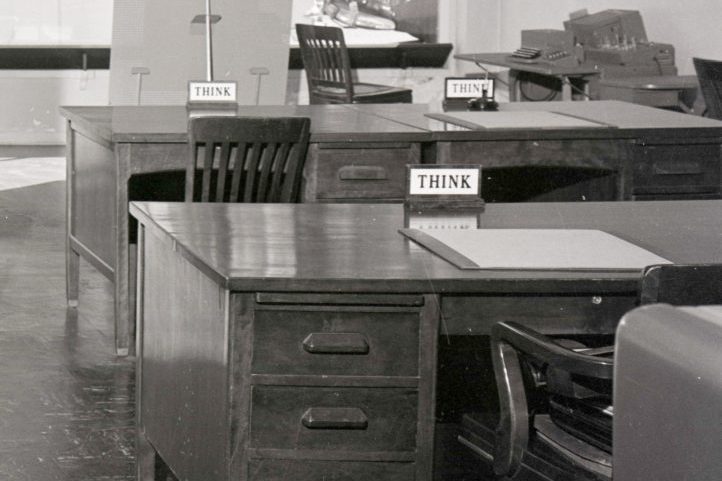
Looking Back’s theme for 2026 is Downtown by the Decades. In the early 1960s, IBM was primarily associated with typewriters and adding machines (computers would not be widely available for some time to come). Its Olympia store was on Capitol Way, near 8th Avenue. IBM founder Thomas Watson required all workers to display IBM’s motto THINK on every desk and wall. Image selected and captioned by Deborah Ross on behalf of the Olympia Historical Society and Bigelow House Museum, https://olympiahistory.org.
Susan Parish collection, Washington State Archives
Looking Back’s theme for 2026 is Downtown by the Decades. In May 1950, Olympia celebrated the centennial of its founding with a parade and other events. This image shows the float for Sunset Life Insurance, with riders in vintage attire. Image selected and captioned by Deborah Ross on behalf of the Olympia Historical Society and Bigelow House Museum, https://olympiahistory.org.
Susan Parish collection, 1950, Washington State Archives

Looking Back’s theme for 2026 is Downtown by the Decades. Between 1950 and 1951, Capitol Lake was created by damming the Deschutes River estuary at Fifth Avenue. This image from 1950 shows the beginning of dam construction, with the estuary being narrowed by the construction of massive earthworks. Image selected and captioned by Deborah Ross on behalf of the Olympia Historical Society and Bigelow House Museum, https://olympiahistory.org.
Unknown photographer, 1950, Susan Parish photograph collection, Washington State Archives

Looking Back’s theme for 2026 is Downtown by the Decades. In this photograph from 1942, we are looking west down 5th Avenue near the Franklin Street intersection. Several buildings in this photograph are still with us, including the Capitol Theater at right and the Donald Building at left. Others, such as the modern-looking Washington State Federation of Labor building to the left of the Donald Building, no longer exist. Image selected and captioned by Deborah Ross on behalf of the Olympia Historical Society and Bigelow House Museum, https://olympiahistory.org.
Susan Parish collection, Washington State Archives
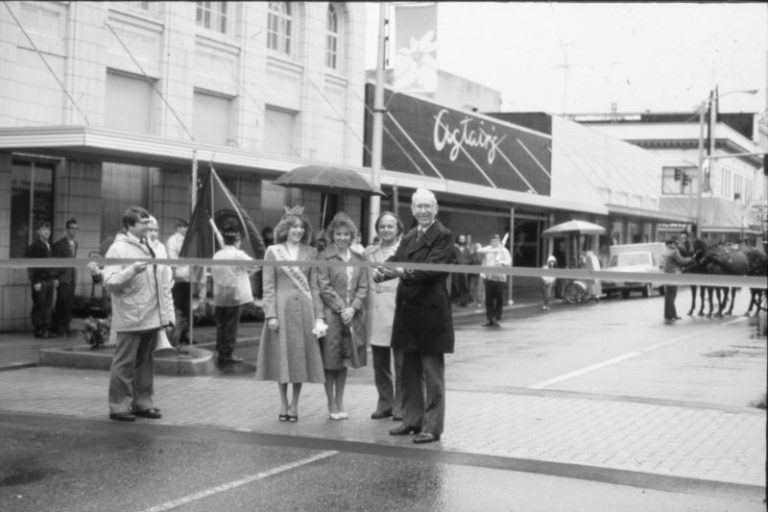
Text © Deborah Ross and The Olympian, 2026

Looking Back’s theme for 2026 is Downtown by the Decades. For decades, the Little Hollywood community, consisting of “float houses,” businesses, and makeshift residences, existed along the Deschutes River Estuary. In 1941, most of it was evacuated, demolished, and burned, to make way for the development of Capitol Lake. A few makeshift homes and float houses continued to linger on throughout the 1940s. This image from 1950 shows the destruction nearly complete. Image selected and captioned by Deborah Ross on behalf of the Olympia Historical Society and Bigelow House Museum, https://olympiahistory.org.

Looking Back’s theme for 2026 is Downtown by the Decades. The USO Club in Olympia opened in early 1942, during World War II. It had a lounge, library, showers, and cafeteria. The USO (United Service Organization) is a nonprofit, founded in 1941, that provides support to service troops and their families. This building was located on Fourth Avenue near Bethel Street. Photograph selected and captioned by Deborah Ross on behalf of the Olympia Historical Society and Bigelow House Museum. More information is available at olympiahistory.org.
Unidentified photographer, around 1942, Courtesy Susan Parish Collection, Washington State Archives
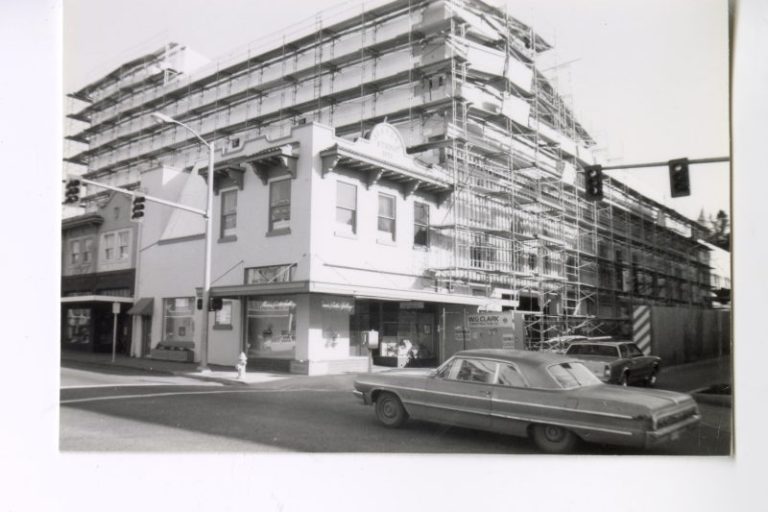
Looking Back’s theme for 2026 is Downtown by the Decades. On April 13, 1949, a 7.1 magnitude earthquake inflicted widespread damage in Olympia and beyond. Pictured here is the corner of the Martin Building, at the southwest corner of 5th and Washington. The marquee and canopy of the M.M. Morris clothing store were detached, and the roofline sustained major damage. Image selected and captioned by Deborah Ross on behalf of the Olympia Historical Society and Bigelow House Museum, https://olympiahistory.org.
Unknown photographer, 1949, Washington State Archives

Looking Back’s theme for 2026 is Downtown by the Decades. College-educated Emily Olivia Richardson married Unitarian pastor John Calvin Kimball in 1860 and accompanied him to Olympia, Washington Territory in 1872. In 1873, she painted this image of the city, looking north on Main Street (Capitol Way) from around 10th Avenue (about three blocks south of the future site of the first Unitarian church building, which wasn’t erected until 1877). Image selected and captioned by Deborah Ross on behalf of the Olympia Historical Society and Bigelow House Museum, https://olympiahistory.org.

Looking Back’s theme for 2026 is Downtown by the Decades. On a frigid day in January 1937, the imposing Odd Fellows Hall, at the southwest corner of Capitol Way and 5th Avenue, burned down. Firefighters bravely battled the fire; icicles hanging from power lines dramatically illustrate the challenge due to the freezing weather. Image selected and captioned by Deborah Ross on behalf of the Olympia Historical Society and Bigelow House Museum, https://olympiahistory.org.
Olympia Fire Department collection, 1937, Washington State Archives

Looking Back’s theme for 2026 is Downtown by the Decades. In the 1930s, when many households still did not have transportation readily available, public libraries visited rural areas with the Thurston County Library Service’s Bookmobile. The trailer is parked in front of the Carnegie Library (the original site of the Olympia Public Library, 620 Franklin SE) in this photo from the 1930s. Image selected and captioned by Deborah Ross on behalf of the Olympia Historical Society and Bigelow House Museum, https://olympiahistory.org.
Unidentified photographer, 1930s, Courtesy Washington State Historical Society

Looking Back’s theme for 2026 is Downtown by the Decades. By the 1920s, the automotive era had fully arrived. In this photograph we are looking north down Capitol Way. The Mitchell Hotel, at left, is now the site of the Governor House Hotel, 621 Capitol Way S. In the distance is the Odd Fellows building, which burned down in 1937. Image selected and captioned by Deborah Ross on behalf of the Olympia Historical Society and Bigelow House Museum, https://olympiahistory.org.
Unidentified photographer, around 1922, Courtesy State Capital Museum collection, Washington State Historical Society

Looking Back’s theme for 2026 is Downtown by the Decades. The Olympia Oyster Company building (now the Olympia Oyster House restaurant at 320 4th Avenue W) was designed in 1924 by architect Joseph Wohleb as a packing and storage facility for the Olympia Oyster Company. This is the only remaining building from Olympia’s oyster industry in downtown Olympia. Image selected and captioned by Deborah Ross on behalf of the Olympia Historical Society and Bigelow House Museum, https://olympiahistory.org.
Jeffers studio photograph, 1924, Courtesy State Capital Museum collection, Washington State Historical Society

Looking Back’s theme for 2026 is Downtown by the Decades. Olympia Knitting Mills was founded in 1909 and moved to its location at Cherry and Legion in 1911; then, in 1929, added a one-story Mission style addition by Joseph Wohleb. The company produced a wide variety of knitwear, including this stylish bathing suit from the catalog of 1920. The building complex still exists. Image selected and captioned by Deborah Ross on behalf of the Olympia Historical Society and Bigelow House Museum, https://olympiahistory.org.
Jeffers photo, 1920, courtesy State Capital Museum collection, Washington State Historical Society

Looking Back’s theme for 2026 is Downtown by the Decades. In about 1914, photographer Robert Esterly produced a valuable series of photographs of downtown businesses. In the early twentieth century, downtown boasted several Chinese restaurants. The Pekin Café, pictured here, was located on Capitol Way between State and Fourth. It was owned by Chinese-born Lock Hoy. Image selected and captioned by Deborah Ross on behalf of the Olympia Historical Society and Bigelow House Museum, https://olympiahistory.org.
Robert Esterly photograph, ca. 1914, Courtesy State Capital Museum collection, Washington State Historical Society

Looking Back’s theme for 2026 is Downtown by the Decades. In 1914, photographer Robert Esterly produced a valuable series of photographs of downtown businesses and their owners. Shown here is the corner of Fourth Avenue and Main Street (now Capitol Way). At left of the image is the Chambers Block, still in existence. The presence of horse-drawn cart captures a time of transition from horse-drawn to motorized transportation. Image selected and captioned by Deborah Ross on behalf of the Olympia Historical Society and Bigelow House Museum, https://olympiahistory.org.
Robert Esterly photograph, ca. 1914, Courtesy State Capital Museum collection, Washington State Historical Society

Looking Back’s theme for 2026 is Downtown by the Decades. In about 1914, photographer Robert Esterly produced a valuable series of photographs of downtown businesses. This photograph captures the bustle of Olympia’s waterfront, with vessels of all sizes and types, and associated industries. Image selected and captioned by Deborah Ross on behalf of the Olympia Historical Society and Bigelow House Museum, https://olympiahistory.org.
Robert Esterly photograph, ca. 1914, Courtesy State Capital Museum collection, Washington State Historical Society

Looking Back’s theme for 2026 is Downtown by the Decades. In 1902 Asahel Curtis and William Romans photographed several important buildings and locations in downtown Olympia. Pictured here is the Carlton Hotel on Columbia Street, a popular lodging place for politicians, lobbyists, and other travelers, as it was located near the waterfront a scant block from Percival Landing. Image selected and captioned by Deborah Ross on behalf of the Olympia Historical Society and Bigelow House Museum, https://olympiahistory.org.
Curtis/Romans photo, 1902, courtesy State Capital Museum collection, Washington State Historical Society

Looking Back’s theme for 2026 is Downtown by the Decades. In 1902, photographer A.D. Rogers took this photograph to commemorate the 50th anniversary of the founding of Olympia Lodge #1 of the Masons. The Masonic Temple, erected in 1855 just three years after the Lodge’s founding, was one of several important buildings flanking Main Street (Capitol Way). Image selected and captioned by Deborah Ross on behalf of the Olympia Historical Society and Bigelow House Museum, https://olympiahistory.org.
Rogers photograph, 1902, courtesy State Capital Museum collection, Washington State Historical Society

Looking Back’s theme for 2026 is Downtown by the Decades. The early 20th century brought demands for better road surfaces for bicycles and early automobiles. In 1909 the city finally paved Fourth Avenue, with workers taking a moment to pose for their photograph, and spectators looking on. Image selected and captioned by Deborah Ross on behalf of the Olympia Historical Society and Bigelow House Museum, https://olympiahistory.org.
unidentified photographer, 1908, courtesy State Capital Museum Collection, Washington State Historical Society

Looking Back’s theme for 2026 is Downtown by the Decades. In 1890, publisher John Miller Murphy erected the grand Olympia Theater, also known as the Olympia Opera House, at 509 4th Avenue. Over its thirty-year lifetime it hosted both local talent and visiting performers, including Mark Twain and John Philips Sousa. Image selected and captioned by Deborah Ross on behalf of the Olympia Historical Society and Bigelow House Museum, https://olympiahistory.org.
Unknown photographer, 1890s, courtesy State Capital Museum Collection, Washington State Historical Society

Looking Back’s theme for 2026 is Downtown by the Decades. By the late 1890s, downtown Main Street (now Capitol Way) was largely commercial. In this image from 1898, we are looking north from Legion Way. Trolley tracks, electrified in 1892, run up and down the street. The Stuart Block is at right of the image, with the Odd Fellows Hall tower visible in the distance. Image selected and captioned by Deborah Ross on behalf of the Olympia Historical Society and Bigelow House Museum, https://olympiahistory.org.

Looking Back’s theme for 2026 is Downtown by the Decades. Two competing private fire companies existed in early Olympia. Pictured here in 1891 are members of the Columbia Fire Company number 2, taken shortly after the company added a new engine and a second story to its building on Columbia Street, between 4th and 5th Avenues. Image selected and captioned by Deborah Ross on behalf of the Olympia Historical Society and Bigelow House Museum, https://olympiahistory.org.
Pettis & Mulligan photo, about 1891, courtesy State Capital Museum collection, Washington State Historical Society

Looking Back’s theme for 2026 is Downtown by the Decades. Each week features a view of downtown Olympia over the years. In 1882, after a fire destroyed most of downtown Olympia, the Talcott Brothers built a new brick structure at 420 Capitol Way (then called Main Street). This cropped image from an 1887 envelope advertises the assortment of goods that they sold. The building still exists and is on the local Heritage Register. Image selected and captioned by Deborah Ross on behalf of the Olympia Historical Society and Bigelow House Museum, https://olympiahistory.org.
1887 envelope, cropped, courtesy Washington State Historical Society

Looking Back’s theme for 2026 is Downtown by the Decades. The Homestead Act encouraged American settlers to come to the west and claim land for a small fee. This photograph from the 1880s shows Olympia’s U.S. Land Office, north of Main Street and 6th Avenue (Capitol Way and Legion), where settlers could file their claims. The man with the furled paper is early settler Charles M. Moore. Image selected and captioned by Deborah Ross on behalf of the Olympia Historical Society and Bigelow House Museum, https://olympiahistory.org
Unknown photographer, courtesy State Capital Museum Collection, Washington State Historical Society

Looking Back’s theme for 2026 is Downtown by the Decades. As Territorial Government grew in the 1880s, the need for lodging for legislators and assorted hangers-on became apparent. Several local business people, including self-described capitalist Pamelia Case Hale, financed the imposing Olympia Hotel. It was on Main Street (Capitol Way), north of 8th Avenue. It burned in a spectacular fire in 1901. Image selected and captioned by Deborah Ross on behalf of the Olympia Historical Society and Bigelow House Museum, https://olympiahistory.org.
Courtesy State Capital Museum collection, Washington State Historical Society

Looking Back’s theme for 2026 is Downtown by the Decades. In the 1870s, Sam Williams established a hardware store near the corner of Fourth Avenue and Capitol Way. Sam and Hulda Williams’ home, shown here, was at the northwest corner of the intersection, the current site of the Mottman Building. The Williams hardware store to its north was later replaced by the Olympia Hardware building, still in existence. Image selected and captioned by Deborah Ross on behalf of the Olympia Historical Society and Bigelow House Museum, https://olympiahistory.org.
A.B. Woodard photo, 1870s, courtesy State Capital Museum collection, Washington State Historical Society

Looking Back’s theme for 2026 is Downtown by the Decades. Each week will feature a view of downtown Olympia over the years. In the 1870s, the commercial center of Olympia was still north of Fourth Avenue. In this 1876 photo, we are looking north down Main Street (Capitol Way) from around Sixth Avenue (now Legion Way). Residences are in the foreground, with shops, restaurants and hotels in the distance. Image selected and captioned by Deborah Ross on behalf of the Olympia Historical Society and Bigelow House Museum, https://olympiahistory.org.
unknown photographer, 1876, courtesy of State Capital Museum collection, Washington State Historical Society

Looking Back’s theme for 2026 is Downtown by the Decades. This etching is likely based on an 1869 photograph. It was published in 1891, in a special edition of the Olympia Tribune, to show what Fourth Avenue looked like the 1860s. The cupola of Columbia Hall (current site of the 4th Ave Tav) can be seen in the mid-distance on the right (north) side of the street. Image selected and captioned by Deborah Ross on behalf of the Olympia Historical Society and Bigelow House Museum, https://olympiahistory.org. 1891 Souvenir Edition, Olympia Tribune, Washington State Library

Attribution: unidentified photographer, 1860s, courtesy Washington State Historical Society
Looking Back’s theme for 2026 is Downtown by the Decades. Edmund Sylvester, founder of Olympia, and his wife Clara Pottle Sylvester, had an imposing Italianate mansion built in the mid-1800s. It was located one block south of what is now Sylvester Park, on Main Street, now Capitol Way. This image is likely from the 1860s. Image selected and captioned by Deborah Ross on behalf of the Olympia Historical Society and Bigelow House Museum, https://olympiahistory.org.
unidentified photographer, 1860s, courtesy Washington State Historical Society

Looking Back’s theme for 2026 is Downtown by the Decades. Each week will feature a view of downtown Olympia over the years. This earliest image of Olympia is by James Alden, commander of the Coast Survey ship Active in 1857. Alden created this sketch soon after the 1855-1856 Puget Sound Treaty Wars, when Olympia was in its infancy. We are looking north down what is now Capitol Way. Image selected and captioned by Deborah Ross on behalf of the Olympia Historical Society and Bigelow House Museum, https://olympiahistory.org.
James Alden watercolor, 1857, courtesy of Washington State Historical Society

Looking Back’s theme for 2025 features Thurston County area photographers, artists, and their subjects. Robert Blankenship and Ed Winstanley operated a stationery and tobacco store in Olympia. The partnership also produced postcards featuring local scenes. This photographic postcard, labeled “Old State Capitol,” was taken in the early 1900s, before its demolition to make way for the current Legislative Building. Photograph selected and captioned by Deborah Ross on behalf of the Olympia Historical Society and Bigelow House Museum, https://olympiahistory.org.

Looking Back’s theme for 2025 features Thurston County area photographers, artists, and their subjects. Robert Blankenship was a member of an early settler family. Along with his business partner Ed Winstanley, he operated a stationery and tobacco store in Olympia. The partnership also produced postcards featuring local scenes. Robert is pictured here with an unidentified friend and three bicycles. Photograph selected and captioned by Deborah Ross on behalf of the Olympia Historical Society and Bigelow House Museum, https://olympiahistory.org.
Unknown photographer, about 1911, courtesy State Capital Museum collection, Washington State Historical Society

Looking Back’s theme for 2025 features Thurston County area photographers. James Wickersham is best remembered for his connection with Alaska, but had an earlier career in the Puget Sound area. He befriended members of the Squaxin Tribe in Mud Bay, and as an amateur photographer he documented images of tribal members and living conditions. Shown here is his photograph of a Squaxin home, from the late 1880s or early 1890s. Image selected and captioned by Deborah Ross on behalf of the Olympia Historical Society and Bigelow House Museum, https://olympiahistory.org. James Wickersham photo, late 1800s, University of Alaska Wickersham Collection

Looking Back’s theme for 2025 features Thurston County area photographers, artists, and their subjects. James Wickersham is remembered for his Alaskan career as an ethnographer, judge, and politician. In his earlier career he lived in Washington Territory and befriended members of the Squaxin Tribe in Mud Bay, advocating on their behalf for the legitimacy of the Indian Shaker religion. As an amateur photographer he documented images of tribal members and living conditions. Image selected and captioned by Deborah Ross on behalf of the Olympia Historical Society and Bigelow House Museum, https://olympiahistory.org.
1905 political poster, courtesy of Washington State Historical Society

Looking Back’s theme for 2025 features Thurston County area photographers, artists, and their subjects. Frank L. Camp (sometimes spelled Camps) established his Olympia studio in about 1891. He specialized in ambrotype portraiture. Pictured here is Clark Savidge as a young mail carrier. Frank Camp later moved to Ashland, Oregon. Clark Savidge entered public service, eventually becoming Commissioner of Public Lands. Image selected and captioned by Deborah Ross on behalf of the Olympia Historical Society and Bigelow House Museum, https://olympiahistory.org.
Frank Camp photo, about 1891, courtesy of State Capital Museum collection, Washington State Historical Society

Looking Back’s theme for 2025 features Thurston County area photographers, artists, and their subjects. Little is known about photographer Oscar Sternberg, who established a photographic studio in Olympia in 1902. This photograph by Sternberg, taken in 1905, shows members of the Olympia Police Department posing in front of then-City Hall on Fourth Avenue, currently the location of the Fourth Ave Tav. Image selected and captioned by Deborah Ross on behalf of the Olympia Historical Society and Bigelow House Museum, https://olympiahistory.org. Oscar Sternberg photo, 1905, courtesy of State Capital Museum collection, Washington State Historical Society

Looking Back’s theme for 2025 features Thurston County area photographers, artists, and their subjects. Although photographer Joseph Buchtel is better known as a Portland, Oregon photographer, he had ties in Thurston County, partnering for a time with Olympia photographer Alonzo Bixby Woodard. He made several portraits of Olympia citizens, including this 1870s photograph of Lurana Ware Percival, wife of merchant “Captain” Samuel Wing Percival. Photograph selected and captioned by Deborah Ross on behalf of the Olympia Historical Society and Bigelow House Museum, https://olympiahistory.org.
Joseph Buchtel portrait, 1870s, courtesy of State Capital Museum collection, Washington State Historical Society

Looking Back’s theme for 2025 features Thurston County area photographers, artists, and their subjects. Photographer Edward Sammis began his career in California but operated a studio in Olympia between 1860 and 1865. His most famous photograph was of Si’ahl, better known by settlers as Chief Seattle. This is the only known photograph of Si’ahl, taken in about 1864. Photograph selected and captioned by Deborah Ross on behalf of the Olympia Historical Society and Bigelow House Museum, https://olympiahistory.org.
Edward Sammis photo, about 1864, courtesy Museum of History and Industry

Looking Back’s theme for 2025 features Thurston County area photographers, artists, and their subjects. Samuel Holmes is the earliest known photographer in Olympia. He created daguerrotypes, an early kind of photograph. He placed this advertisement in Olympia’s early newspaper, the Pioneer and Democrat, in 1854. To date, no confirmed photographs by Holmes have been located. Image selected and captioned by Deborah Ross on behalf of the Olympia Historical Society and Bigelow House Museum, https://olympiahistory.org.
Pioneer and Democrat advertisement, May 1854

Looking Back’s theme for 2025 features Thurston County area photographers, artists, and their subjects. William J. Yeager, an early settler, opened his photographic studio in about 1865, and worked with various business partners including John Vivian Yantis. No existing photographs by him have been identified. This pencil and charcoal portrait is by an unknown artist. Image selected and captioned by Deborah Ross on behalf of the Olympia Historical Society and Bigelow House Museum, https://olympiahistory.org.
Unknown artist, 1860s, courtesy of State Capital Museum collection, Washington State Historical Society

Looking Back’s theme for 2025 features Thurston County area photographers, artists, and their subjects. Ron Allen’s photographic career began with State Patrol, then led to his own studio; he photographed legislators, local people, and events. This humorous photo from 1969 shows legislator Hal Wolf at Ragle “Rags” Thornton’s beauty salon at the Legislative Building. We extend condolences to the family following Ron’s death in April of this year. Photograph selected and captioned by Deborah Ross on behalf of the Olympia Historical Society and Bigelow House Museum, , https://olympiahistory.org.
Ron Allen photo, 1969, Susan Parish collection, Washington State Archives

Looking Back’s theme for 2025 features Thurston County area photographers, artists, and their subjects. Ron Allen’s photographic career began with State Patrol, then led to his own studio; he photographed legislators, local people, and events. He was photographer for the Puyallup Fair for 47 years and is shown there in a photo from the 1960s. We extend condolences to the family following Ron’s death in April of this year. Photograph selected and captioned by Deborah Ross on behalf of the Olympia Historical Society and Bigelow House Museum, https://olympiahistory.org.
Photos courtesy of the Allen family

Looking Back’s theme for 2025 features Thurston County area photographers, artists, and their subjects. John Boyd Ellis was brought up in Olympia but moved to Arlington after graduating from Western Washington University. He and his son Clifford operated a successful photography and postcard business featuring scenes of Washington State. Many of them were of J. Boyd’s hometown, pictured here in a photo from around the 1930s. The location is Capitol Way looking north. Photograph selected and captioned by Deborah Ross on behalf of the Olympia Historical Society and Bigelow House Museum, https://olympiahistory.org.
Ellis Postcard, around 1930s

Looking Back’s theme for 2025 features Thurston County area photographers, artists, and their subjects. Viretta Chambers was the daughter of early Thurston County settlers Andrew and Margaret White Chambers. She married prominent Seattle resident Charles Denny. She was a talented and well-known photographer, establishing the Seattle Camera Club in 1895. This photograph commemorates a garden party that she held in 1901. Photograph selected and captioned by Deborah Ross on behalf of the Olympia Historical Society and Bigelow House Museum, https://olympiahistory.org.

Looking Back’s theme for 2025 features Thurston County area photographers, artists, and their subjects. John Vivian Yantis was the son of early settler Benjamin F. Yantis. He operated a photograph studio near the corner of Fourth Avenue and Main Street (Capitol Way) in the mid-1860s, and served in the Territorial Legislature. He is pictured here with his wife Margaret Hume Yantis, in this photograph taken by L. Wilson Clark. Photograph selected and captioned by Deborah Ross on behalf of the Olympia Historical Society and Bigelow House Museum, https://olympiahistory.org.\
Clark Photo, mid-1800s, Courtesy State Capital Museum Collection, Washington State Historical Society

Looking Back’s theme for 2025 features Thurston County area photographers, artists, and their subjects. Joseph McKnight arrived in Olympia in 1913 and operated the McKnight Studio until his retirement in 1946. Among his photographs is a series documenting the construction of the Legislative Building, shown here in 1926 with its dome partly completed. Photograph selected and captioned by Deborah Ross on behalf of the Olympia Historical Society and Bigelow House Museum, https://olympiahistory.org.
Joseph McKnight photo, 1926, Washington State Archives, State Library collection

Looking Back’s theme for 2025 features Thurston County area photographers, artists, and their subjects. This image by local photographer Michael O’Connor, likely from the early 1900s, shows the Northern Pacific depot in downtown Olympia, to the south of the Fourth Avenue bridge. Photograph selected and captioned by Deborah Ross on behalf of the Olympia Historical Society and Bigelow House Museum, https://olympiahistory.org.
Michael O’Connor photograph, early 1900s, courtesy Moody Collection, Olympia Historical Society and Bigelow House Museum

Looking Back’s theme for 2025 features Thurston County area photographers, artists, and their subjects. Michael O’Connor arrived in Olympia in 1884 and established a book and stationery store that he operated until his retirement in 1915. He also promoted Olympia through photography. He is shown here in a photograph by the Rogers Studio, taken shortly after statehood. Photograph selected and captioned by Deborah Ross on behalf of the Olympia Historical Society and Bigelow House Museum.
Rogers Studio, about 1890, courtesy State Capital Museum Collection, Washington State Historical Society

Looking Back’s theme for 2025 features Thurston County area photographers, artists, and their subjects. William Duckering was an Olympia-based photographer, active in the latter part of the 19th century. Here he captures a dress rehearsal for a production of H.M.S. Pinafore, featuring some of Olympia’s most prominent citizens. Photograph selected and captioned by Deborah Ross on behalf of the Olympia Historical Society and Bigelow House Museum, https://olympiahistory.org.
Duckering photo, about 1895, Susan Parish Collection, Washington State Archives
Looking Back’s theme for 2025 features Thurston County area photographers, artists, and their subjects. The Best Camera Shop sold cameras and film in the early to mid-20th century. In 1950, they expanded to a photographic studio staffed by photographers John Macaluso, Jay Jaycox, and Bruce Burkhart. The studio was launched just in time to capture the Olympia Centennial “Grand Parade of Progress” on May 6. Photograph selected and captioned by Deborah Ross on behalf of the Olympia Historical Society and Bigelow House Museum, https://olympiahistory.org.
Best Camera photograph, 1950, courtesy State Capital Museum Collection, Washington State Historical Society

Looking Back’s theme for 2025 features Thurston County area photographers, artists, and their subjects. Huntington Brothers operated a photographic business in downtown Olympia in the mid-19th century. Their specialty was stereographs, a pair of nearly identical photographs that creates the illusion of a three-dimensional image when viewed through a stereoscope. This image is the right side of a stereograph of Fourth Avenue in about 1874. Photograph selected and captioned by Deborah Ross on behalf of the Olympia Historical Society and Bigelow House Museum, https://olympiahistory.org.
Huntington Brothers, about 1874, courtesy State Capital Museum collection, Washington State Historical Society

Looking Back’s theme for 2025 features Thurston County area photographers, artists, and their subjects. L. Wilson Clark was a very early photographer in Olympia. His studio was on Main Street (now Capitol Way); he photographed subjects in Thurston and Pierce counties. Pictured here is settler James Offut also spelled Offutt) with a bundle of hops (Offut Lake is named for this family). Photograph selected and captioned by Deborah Ross on behalf of the Olympia Historical Society and Bigelow House Museum, https://olympiahistory.org.
L. Wilson Clark photo, 1860-1870, courtesy State Capital Museum Collection, Washington State Historical Society

Looking Back’s theme for 2025 features Thurston County area photographers, artists, and their subjects. James Madison Alden was an artist, topographer and junior officer aboard the U.S.S. Active for the U.S. Coast Survey. This watercolor is the earliest known image of Olympia, painted in 1857, looking north down what is now Capitol Way. The large building at left may represent the recently-completed Territorial Capitol. Photograph selected and captioned by Deborah Ross on behalf of the Olympia Historical Society and Bigelow House Museum, https://olympiahistory.org.
James M. Alden watercolor, 1857, Courtesy Washington State Historical Society

Looking Back’s theme for 2025 features Thurston County area photographers, artists, and their subjects. Between 1891 and 1894, photographer Agnes Mitchel operated a studio at 507 4th Avenue. The State Capital Museum collection at the Washington State Historical Society contains two photographs by Mitchel, including this photograph of Belle (Mandana Isabelle) Bush Gaston, daughter of noted agriculturalist and state representative William Owen Bush, and granddaughter of early settlers George and Isabella Bush. Photograph selected and captioned by Deborah Ross on behalf of the Olympia Historical Society and Bigelow House Museum, https://olympiahistory.org. courtesy State Capital Museum collection, Washington State Historical Society

Looking Back’s theme for 2025 features Thurston County area photographers, artists, and their subjects. William B. Conser was a photographer for the Olympian who captured many events and people, including an historic series that documented the destruction caused by the 1949 earthquake. Shown here is the elaborate scaffolding and tramway erected to repair the lantern atop the Legislative Building. Photograph selected and captioned by Deborah Ross on behalf of the Olympia Historical Society and Bigelow House Museum, https://olympiahistory.org.
Conser photograph, about 1950, courtesy The Olympian

Looking Back’s theme for 2025 features Thurston County area photographers, artists, and their subjects. The 1935 Olympia High School yearbook notes that William P. Conser, pictured here, was involved with journalism as early as high school. He became a photographer for the Olympian and captured many events and people, including an historic series that documented the destruction caused by the 1949 earthquake. Photograph selected and captioned by Deborah Ross on behalf of the Olympia Historical Society and Bigelow House Museum, https://olympiahistory.org. Olympus, high school yearbook of the William Winlock Miller High School, 1935

Looking Back’s theme for 2025 features Thurston County area photographers, artists, and their subjects. Merle Junk, a product of the Olympia school system, turned to photography early in his life. He was prolific and well-respected. He captured images of legislators, local events, and places, often for promotional purposes. This image from 1950, possibly a promotional photograph, shows an unidentified state patrol member discussing a map with a young woman. Photograph selected and captioned by Deborah Ross on behalf of the Olympia Historical Society and Bigelow House Museum, https://olympiahistory.org. Washington State Archives, Susan Parish Collection

Looking Back’s theme for 2025 features Thurston County area photographers, artists, and their subjects. Merle Junk, a product of the Olympia school system, turned to photography early in his life. He was prolific and well-respected. He captured images of legislators, local events, and places, often for promotional purposes. This photograph from a family scrapbook was taken at the time of his marriage to Marjorie May Cook in 1923. Photograph selected and captioned by Deborah Ross on behalf of the Olympia Historical Society and Bigelow House Museum, https://olympiahistory.org.
Photo Courtesy Rebecca Junk Sherrell

Looking Back’s theme for 2025 features Thurston County area photographers, artists, and their subjects. Charles M. Moore arrived in Washington Territory with his family in 1877 and was a merchant in downtown Olympia, as well as an avid amateur photographer in his later years. Shown here is Moore’s aunt, Eliza Olney (sister of prominent suffragists Mary Olney Brown and Charlotte Emily Olney French and Moore’s mother Maria). Photograph selected and captioned by Deborah Ross on behalf of the Olympia Historical Society and Bigelow House Museum, https://olympiahistory.org.

Looking Back’s theme for 2025 features Thurston County area photographers, artists, and their subjects. Charles M. Moore arrived in Washington Territory with his family in 1877 and was a merchant in downtown Olympia. When photographic technology became widely available to nonprofessionals in the late 19th century, Moore captured local people and places as an amateur “Kodaker.” Photograph selected and captioned by Deborah Ross on behalf of the Olympia Historical Society and Bigelow House Museum, https://olympiahistory.org.

Looking Back’s theme for 2025 features Thurston County area photographers, artists, and their subjects. Pictured here is the studio of photographer Ida B. Smith, who was active in the late 19th and early 20th century. The studio, shared with her sister, photographer Agnes Mitchel, was near the corner of Jefferson and 4th Avenue, next door to the Olympia Opera House. The identity of the woman posing for the photograph is not known. Image selected and captioned by Deborah Ross on behalf of the Olympia Historical Society and Bigelow House Museum, https://olympiahistory.org.
Unknown photographer, 1895, courtesy State Capital Museum collection, Washington State Historical Society

Looking Back’s theme for 2025 features Thurston County area photographers, artists, and their subjects. Vibert Jeffers was a prolific Olympia-based photographer, having inherited the business from his father and mother, Joseph and Opal Jeffers. This photograph of the North Coast (later Greyhound) bus depot in downtown Olympia was taken in 1937, soon after the depot was built. The building has now been repurposed as a café. Photograph selected and captioned by Deborah Ross on behalf of the Olympia Historical Society and Bigelow House Museum, https://olympiahistory.org.

Looking Back’s theme for 2025 features Thurston County area photographers, artists, and their subjects. Ida B. Smith, pictured here in a self-portrait, came to Olympia with her husband in about 1891. After her husband’s death, Ida took up professional photography, first with her sister Agnes Mitchel and then on her own. Photograph selected and captioned by Deborah Ross on behalf of the Olympia Historical Society and Bigelow House Museum, https://olympiahistory.org.

Looking Back’s theme for 2025 features Thurston County area photographers, artists, and their subjects. Vibert Jeffers, pictured here in a cropped family photo, was the son of photographer Joseph Jeffers and Opal Jeffers. Vibert took over the business in 1930, a few years after Joseph was killed in a climbing accident. Vibert was responsible for many photographs of members of the legislature, local people, places, and events. Photograph selected and captioned by Deborah Ross on behalf of the Olympia Historical Society and Bigelow House Museum, https://olympiahistory.org.
Jeffers studio photo (cropped), about 1915, courtesy State Capital Museum collection, Washington State Historical Society

Looking Back’s theme for 2025 features Thurston County area photographers, artists, and their subjects. Joseph Jeffers grew up in Olympia and took an interest in photography from an early age. In 1913, he commissioned architect Joseph Wohleb to create this studio, at the corner of 4th and Washington, at the same location as his previous studio. This was Wohleb’s first major commission, and still exists. Image selected and captioned by Deborah Ross on behalf of the Olympia Historical Society and Bigelow House Museum, https://olympiahistory.org.
Joseph Jeffers photo, about 1914, Courtesy State Capital Museum Collection, Washington State Historical Society

Looking Back’s theme for 2025 features Thurston County area photographers, artists, and their subjects. Joseph Jeffers grew up in Olympia and took an interest in photography from an early age. He is pictured here, in a self-portrait with friends, from about 1908, as they return from a hunting expedition. His studio is behind him, at the corner of 4th and Washington. Image selected and captioned by Deborah Ross on behalf of the Olympia Historical Society and Bigelow House Museum, https://olympiahistory.org.
: Joseph Jeffers photo, 1908, courtesy State Capital Museum Collection, Washington State Historical Society

Looking Back’s theme for 2025 features Thurston County area photographers, artists, and their subjects. Clark Kinsey was one of three brothers who documented the logging and lumber industry in the late 19th and early 20th century. Although he was not from Thurston County, he and his family spent several seasons in Grays Harbor, Mason, and Thurston County. This photo is of the Little Rock (now Littlerock) Logging Company crew with their steam-driven “donkey engine.” Photograph selected and captioned by Deborah Ross on behalf of the Olympia Historical Society and Bigelow House Museum, https://olympiahistory.org.
Clark Kinsey photo, about 1915, downloaded from Wikimedia Commons

Looking Back’s theme for 2025 features Thurston County area photographers, artists, and their subjects. Adelbert D. (A.D.) Rogers was a prolific Olympia-based photographer. His primary subjects were portraits, including this portrait of his daughter Edna, from around 1884. Photograph selected and captioned by Deborah Ross on behalf of the Olympia Historical Society and Bigelow House Museum, https://olympiahistory.org.
A.D. Rogers Photo, about 1884, Courtesy State Capital Museum collection, Washington State Historical Society

Looking Back’s theme for 2025 features Thurston County area photographers, artists, and their subjects. Adelbert D. (A.D.) Rogers was a prolific Olympia-based photographer. His primary subjects were portraits, including this self-portrait from around 1890. Among many other subjects over the years, A.D. Rogers was commissioned to take the photographic portraits of nearly every member of the first state legislature, after statehood in 1889. Photograph selected and captioned by Deborah Ross on behalf of the Olympia Historical Society and Bigelow House Museum, https://olympiahistory.org

Looking Back’s theme for 2025 features Thurston County area photographers, artists, and their subjects. In 2005, historian Lynn Erickson and artist Robert Chamberlain collaborated to produce a series of watercolors called Sylvester’s Window. This watercolor (cropped from the original) shows the Grand Parade of Progress in 1950, celebrating Olympia’s Centennial. The artist whimsically included himself as a young man chatting with Margaret McKenny by the grandstand. Image selected and captioned by Deborah Ross on behalf of the Olympia Historical Society and Bigelow House Museum, https://olympiahistory.org.
Courtesy Olympia Historical Society and Bigelow House Museum (cropped image from Sylvester’s Window project)

Looking Back’s theme for 2025 features Thurston County area photographers, artists, and their subjects. In 2005, historian Lynn Erickson and artist Robert Chamberlain collaborated to produce a series of watercolors called Sylvester’s Window. The images portrayed how downtown Olympia evolved over the course of 150 years, from a spot overlooking Sylvester Park. This watercolor is a self-portrait by Mr. Chamberlain, painted a few years after he completed the Sylvester’s Window project. Image selected and captioned by Deborah Ross on behalf of the Olympia Historical Society and Bigelow House Museum, https://olympiahistory.org.
Courtesy Robert Chamberlain

Looking Back’s theme for 2025 features Thurston County area photographers, artists, and their subjects. In about 1914, Tumwater-based photographer Robert Esterly undertook a project to capture images of businesses and their owners in downtown Olympia. Here teenaged manager John Percival is shown outside of the Percival Dock shipping complex at the Port of Olympia. Photograph selected and captioned by Deborah Ross on behalf of the Olympia Historical Society and Bigelow House Museum, https://olympiahistory.org.

Looking Back’s theme for 2025 features Thurston County area photographers, artists, and their subjects. Robert Esterly was an early owner of a shingle mill at Tumwater Falls. He was also a talented photographer. In this photo from the late 1800s, said to be in part a self-portrait, he and his companions proudly show the result of a successful bear hunt. Photograph selected and captioned by Deborah Ross on behalf of the Olympia Historical Society and Bigelow House Museum, https://olympiahistory.org.

Looking Back’s theme for 2025 is Thurston County area photographers, artists, and their subjects. Artist James Tilton Pickett was the son of Confederate General George Pickett and Sâkis Tiigang, a Haida woman. James attended Union Academy in Olympia, then art school, and was a talented artist. This drawing by James portrays Mount Rainier as seen from near Steilacoom. Image selected and captioned by Deborah Ross on behalf of the Olympia Historical Society and Bigelow House Museum, https://olympiahistory.org.
Photograph by Arley Van Epps of J.T. Pickett drawing, Courtesy Washington State Historical Society, State Capital Museum collection

Looking Back’s theme for 2025 features Thurston County area photographers, artists, and their subjects. This photograph by Olympia photographer Alonzo Bixby Woodard is of James Tilton Pickett, the son of Confederate General George Pickett, and Sâkis Tiigang, a Haida woman. This photograph was taken when James was attending Union Academy in Olympia. James later attended art school and was a talented painter. Image selected and captioned by Deborah Ross on behalf of the Olympia Historical Society and Bigelow House Museum, https://olympiahistory.org.

Looking Back’s theme for 2025 features Thurston County area photographers, artists, and their subjects. Alonzo Bixby Woodard was a member of an early settler family. He practiced dentistry and photography; his home still exists on West Bay Drive. This photograph by Woodard is a portrait of his brother Adelbert’s wife, Josie Clark Woodard, who was also a member of an early settler family. Photograph selected and captioned by Deborah Ross on behalf of the Olympia Historical Society and Bigelow House Museum, https://olympiahistory.org.
Photograph about 1870, Courtesy Washington State Historical Society, State Capital Museum collection, Washington State Historical Society

Looking Back’s theme for 2025 features Thurston County area photographers, artists, and their subjects. Alonzo Bixby Woodard was a member of an early settler family. He practiced dentistry and photography; his home still exists on West Bay Drive. This photograph is a self portrait from around the 1870s. Photograph selected and captioned by Deborah Ross on behalf of the Olympia Historical Society and Bigelow House Museum, https://olympiahistory.org.
self portrait, around 1870s, courtesy State Capital Museum collection, Washington State Historical Society

Looking Back’s theme for 2024 is Many Streams, celebrating our rich and diverse history. The Bigelow neighborhood, Bigelow Park, and Bigelow Street are named for an early settler family. Pictured here is Ann Elizabeth White, who married Olympia attorney Daniel Bigelow in 1854. The Bigelows erected their home on the east side of Olympia around 1860. It is one of the oldest surviving residences in Olympia, currently operated as the Bigelow House Museum. Photograph selected and captioned by Deborah Ross on behalf of the Olympia Historical Society and Bigelow House Museum, olympiahistory.org.

Looking Back’s theme for 2024 is Many Streams, celebrating our rich and diverse history. Like BBC period dramas, Olympia had its “upstairs and downstairs” residents. Pictured here is the home of Dr. Waughop on Main Street (now Capitol Way). Barely visible below the ground level is the family’s servant, Augusta Sherwood. Miss Sherwood was the daughter of Mason County millwright Joseph Sherwood and his wife Mary, a member of the Skokomish Tribe. Photograph selected and captioned by Deborah Ross on behalf of the Olympia Historical Society and Bigelow House Museum, https://olympiahistory.org/many-streams-a-resource-guide/.
Courtesy Washington State Historical Society, State Capital Museum collection

Looking Back’s theme for 2024 is Many Streams, celebrating our rich and diverse history. According to a 1964 article in the Olympian, Ernest Cheeka, Jr., was installed that year as Makah hereditary chief, after he reached adulthood. Cheeka, then a resident of Olympia, took the Indian name of Kolchote. He is pictured here with a ceremonial mask, in preparation for his installation. Cheeka was a Vietnam veteran, accomplished artist, and supporter of Native American rights and traditions. He died in 2011. Photograph selected and captioned by Deborah Ross on behalf of the Olympia Historical Society and Bigelow House Museum, olympiahistory.org.
Daily Olympian photo, 1964, State Capital Museum collection, Washington State Historical Society

Looking Back’s theme for 2024 is Many Streams, celebrating our rich and diverse history. William Owen Bush, son of settlers Isabella James Bush and mixed-race George Bush, made his mark in many arenas in early Washington Territory and State. He was a noted agriculturist, served as the first African American member of the Washington Territorial Legislature, and helped found Washington State University. Photograph selected and captioned by Deborah Ross on behalf of the Olympia Historical Society and Bigelow House Museum, https://olympiahistory.org/many-streams-a-resource-guide/.
Photograph about 1890, Courtesy Washington State Historical Society, State Capital Museum collection, Washington State Historical Society

Looking Back’s theme for 2024 is Many Streams, celebrating our rich and diverse history. In 1988 Olympia voters helped make history when they elected local community organizer Cora Pinson, pictured here, to the City Council. She was the first African American woman to hold such a position in Washington State. Pinson served on the Olympia City Council from 1987 to 1991. Photograph selected and captioned by Deborah Ross on behalf of the Olympia Historical Society and Bigelow House Museum, https://olympiahistory.org/many-streams-a-resource-guide/. Photo courtesy Thelma Jackson.

Looking Back’s theme for 2024 is Many Streams, celebrating our rich and diverse history Barbara O’Neill was a commanding presence in our area for many years. While operating a soul food restaurant on Fourth Avenue, she instituted a practice of providing free holiday meals for those in need. The tradition continued after her death, with the annual Barb’s Family and Friends program, led by her children and numerous volunteers and supporters. Photograph selected and captioned by Deborah Ross on behalf of the Olympia Historical Society and Bigelow House Museum, https://olympiahistory.org/many-streams-a-resource-guide/. Photo courtesy City of Olympia

Looking Back’s theme for 2024 is Many Streams, celebrating our rich and diverse history. Jacob Bean immigrated to Olympia from Russia in 1902, bringing with him his family’s Torah (first five books of the Hebrew Bible). He, his wife Mollie, and their son Earl owned the business now known as Olympia Supply, still in existence in downtown Olympia. Jacob, Mollie, and their son Earl are pictured here around 1907. The Bean family’s involvement with the business spans three generations. Photograph selected and captioned by Deborah Ross on behalf of the Olympia Historical Society and Bigelow House Museum, https://olympiahistory.org/many-streams-a-resource-guide/.
Photograph around 1907, courtesy Washington State Historical Society, State Capital Museum collection

Looking Back’s theme for 2024 is Many Streams, celebrating our rich and diverse history. In March 1964, Marlon Brando arrived in our area to support Native American tribes as they challenged the state’s interpretation of fishing treaty rights. He was arrested for his efforts. He’s shown here in the Thurston County Courthouse, consulting with Puyallup tribe member and codefendant Robert Satiacum. Photograph selected and captioned by Deborah Ross on behalf of the Olympia Historical Society and Bigelow House Museum, https://olympiahistory.org/many-streams-a-resource-guide/.
Daily Olympian photo, 1964, State Capital Museum collection, Washington State Historical Society

Looking Back’s theme for 2024 is Many Streams, celebrating our rich and diverse history. Chinese Americans have a long history in our community. Many Chinese immigrants lived and worked in areas of downtown informally dubbed “Chinatown,” although the location of these quarters changed over the years. Shown here is the back of Chinatown as it existed in 1941, at 5th Avenue and Water Street. Photograph selected and captioned by Deborah Ross on behalf of the Olympia Historical Society and Bigelow House Museum, https://olympiahistory.org/many-streams-a-resource-guide/.

Looking Back’s theme for 2024 is Many Streams, celebrating our rich history. Thomas Park, shown here, was born in Bermuda and a bricklayer by trade. He was a long-time family associate of early settlers Robert and Mary Louisa Frost and family. He is buried in the Frost family cemetery lot at the Masonic Memorial Park. Photograph selected and captioned by Deborah Ross on behalf of the Olympia Historical Society and Bigelow House Museum, https://olympiahistory.org/many-streams-a-resource-guide/.
Unknown Photographer, late 1800s, Courtesy State Capital Museum collection, Washington State Historical Society

Looking Back’s theme for 2024 is Many Streams, celebrating our rich and diverse history. Nisqually Tribal elder William Frank, Sr., father of activist Billy Frank Jr., poles a canoe on the Nisqually River. This photograph from 1962 accompanied a Daily Olympian profile of Frank, Sr., in which he lamented the struggles of the Nisqually Tribe and the fisheries resource it traditionally relied on for sustenance. Photograph selected and captioned by Deborah Ross on behalf of the Olympia Historical Society and Bigelow House Museum. For more information, visit olympiahistory.org. https://olympiahistory.org/many-streams-a-resource-guide/.
Photo courtesy The Olympian

Looking Back’s theme for 2024 is Many Streams, celebrating our rich and diverse history. Margaret Whyte was responsible for bringing the concept of a Continuing Care Retirement Community to the developers of the Panorama retirement community developers. She and her life-long companion Marie Lauenroth were also among the first residents. In this 1969 photo, Margaret displays her skill as a “Rockhound.” Photograph selected and captioned by Deborah Ross on behalf of the Olympia Historical Society and Bigelow House Museum. Photograph selected and captioned by Deborah Ross on behalf of the Olympia Historical Society and Bigelow House Museum.
Courtesy Panorama Resident Archives

Looking Back’s theme for 2024 is Many Streams, celebrating our rich history. Scandinavians began arriving in the Pacific Northwest in the late 1800s, with many working in logging, lumber, and construction industries. In 1921, Swedish-born Ed Westman, pictured here, founded the Olympia Veneer Company, which was a revolutionary experiment in cooperative ownership as well as innovator in the veneer industry. Photograph selected and captioned by Deborah Ross on behalf of the Olympia Historical Society and Bigelow House Museum, https://olympiahistory.org/many-streams-a-resource-guide/. Courtesy American Plywood Association, 1969

Looking Back’s theme for 2024 is Many Streams, celebrating our rich history. The Olympia Junk Company, located at the corner of Legion Way and Columbia, was founded in about 1906 by Jewish entrepreneur Morris Berkowitz, who is likely in this 1914 photograph. It was later purchased by Morris’s in-laws, the Bean family, and became Olympia Supply, still in business in a building slightly to the south of the original. Photograph selected and captioned by Deborah Ross on behalf of the Olympia Historical Society and Bigelow House Museum, https://olympiahistory.org/many-streams-a-resource-guide/.
Esterly photograph, 1914, Courtesy State Capital Museum collection, Washington State Historical Society

Looking Back’s theme for 2024 is Many Streams, celebrating our rich and diverse history. In about 1881, Squaxin tribal member John Slocum and Louis Yowaluch, pictured here, and their families, co-founded the Indian Shaker church near Mud Bay. The denomination eventually spread to include dozens of churches throughout the Pacific Northwest. The Indian Shaker church at Mud Bay, considered the Mother Church of the denomination, still exists. Image selected and captioned by Deborah Ross on behalf of the Olympia Historical Society and Bigelow House Museum, https://olympiahistory.org/many-streams-a-resource-guide/.
Smithsonian Institution Archives

Looking Back’s theme for 2024 is Many Streams, celebrating our rich and diverse history. Beginning in the late 1800s and up to the present, Chinese-American families have contributed to Olympia’s commerce and social life in many ways, including the restaurant business. Pictured here is Kay’s Chop Suey, on Capitol Way, owned and operated by the Kay family. Photograph selected and captioned by Deborah Ross on behalf of the Olympia Historical Society and Bigelow House Museum. Photograph selected and captioned by Deborah Ross on behalf of the Olympia Historical Society and Bigelow House Museum, https://olympiahistory.org/many-streams-a-resource-guide/.
1930s photo, Courtesy the Kay family

Looking Back’s theme for 2024 is Many Streams, celebrating our rich and diverse history. The Pacific House, located at what is now State Avenue and Capitol Way, was managed by African-American Rebecca Groundage Howard and her husband Alexander. With its location near Budd Inlet, it was popular with travelers and locals alike. Photograph selected and captioned by Deborah Ross on behalf of the Olympia Historical Society and Bigelow House Museum, https://olympiahistory.org/many-streams-a-resource-guide/.
Asahel Curtis photograph, 1902, courtesy Washington State Historical Society

Looking Back’s theme for 2024 is Many Streams, celebrating our rich history. In 1975, large numbers of Vietnamese refugees arrived in the US at temporary resettlement centers. When California Governor Jerry Brown refused them permanent settlement status, Washington Governor Dan Evans asked staff member (later Secretary of State) Ralph Munro, pictured here, to go to Camp Pendleton and invite the refugees to settle in Washington State. They and their descendants continue to contribute to our vibrant community. Photograph selected and captioned by Deborah Ross on behalf of the Olympia Historical Society and Bigelow House Museum, https://olympiahistory.org/many-streams-a-resource-guide/. Photo courtesy Washington State Archives.

Looking Back’s theme for 2024 is Many Streams, celebrating our rich and diverse history. Edward Salomon, pictured here, became Washington Territorial governor in 1870. He was the highest ranked Jewish general during the Civil War and served heroically at the Battle of Gettysburg before being appointed governor by President U.S. Grant. Image selected and captioned by Deborah Ross on behalf of the Olympia Historical Society and Bigelow House Museum, https://olympiahistory.org/many-streams-a-resource-guide/.
Washington State Archives, Territorial Governors

Looking Back’s theme for 2024 is Many Streams, celebrating our rich and diverse history. Pictured here is Joyce Simmons Cheeka, Squaxin Island Tribe activist. Mrs. Cheeka was trained as a Rememberer, responsible for preserving and celebrating her tribal culture. She was an expert on Salish languages and taught at the University of Washington. Photograph selected and captioned by Deborah Ross on behalf of the Olympia Historical Society and Bigelow House Museum. Photograph selected and captioned by Deborah Ross on behalf of the Olympia Historical Society and Bigelow House Museum, https://olympiahistory.org/many-streams-a-resource-guide/.

Looking Back’s theme for 2024 is Many Streams, celebrating our rich and diverse history. Pictured here is the James family, including Chinese-born father Toone James and his wife Nettie Chiang, and their five children. Photograph selected and captioned by Deborah Ross and Ron Locke on behalf of the Olympia Historical Society and Bigelow House Museum. Photograph selected and captioned by Deborah Ross on behalf of the Olympia Historical Society and Bigelow House Museum, https://olympiahistory.org/many-streams-a-resource-guide/.
Ida Smith photo, around 1900, courtesy State Capital Museum Collection, Washington State Historical Society

Looking Back’s theme for 2024 is Many Streams, celebrating our rich and diverse history. Catherine McLeod Mounts, pictured here, was the daughter of Clayquodote Scanewah, a member of the Nisqually, Klickitat, and Quinault tribes; and Hudson’s Bay Company employee John McLeod. She married Daniel Morgan Mounts, who settled near the mouth of the Nisqually River. Photograph selected and captioned by Deborah Ross on behalf of the Olympia Historical Society and Bigelow House Museum, https://olympiahistory.org/many-streams-a-resource-guide/.
photograph by Scott, about 1915, Courtesy State Capital Museum Collection, Washington State Historical Society

Looking Back’s theme for 2024 is Many Streams, celebrating our rich and diverse history. Festus Campbell, shown in this photograph from the mid-1800s, was born in Louisiana and escaped slavery to settle in Massachusetts, later moving to Olympia. A talented horticulturalist, he lived with his long-time companion Mary Quincy in a home on what is now Capitol Campus. Photograph selected and captioned by Deborah Ross on behalf of the Olympia Historical Society and Bigelow House Museum, https://olympiahistory.org/many-streams-a-resource-guide/.
Courtesy First Baptist Church, Pittsfield, Massachusetts

Looking Back’s theme for 2024 is Many Streams, celebrating our rich and diverse history. Delbert “Del” McBride, shown here, was a long-time curator of the State Capital Museum as well as an artist. He and his brother Bud McBride, and Bud’s long-term partner Richard Schneider, owned the Klee Wyk studio in the Nisqually Valley. Del’s artwork was recently featured in a book and exhibit, The Lavender Palette: Gay Culture and the Art of Washington State. Photograph selected and captioned by Deborah Ross on behalf of the Olympia Historical Society and Bigelow House Museum, https://olympiahistory.org/many-streams-a-resource-guide/.Daily Olympian photo, June 1966

Looking Back’s theme for 2024 is Many Streams, celebrating our rich and diverse history. A young Henry Harris looks distinctly unimpressed at being photographed in his smart kilted suit. The Harris family were prominent Olympia merchants and active in the Jewish community. Their store building still exists at 518 Capitol Way, and their home, formerly adjacent to Sylvester Park, is now at the corner of 7th and Adams. Photograph selected and captioned by Deborah Ross on behalf of the Olympia Historical Society and Bigelow House Museum, https://olympiahistory.org/many-streams-a-resource-guide/.
Courtesy Washington State Historical Society, State Capital Museum collection, Washington State Historical Society

Looking Back’s theme for 2024 is Many Streams, celebrating our rich and diverse history. Sam Fun Locke, dubbed the Mayor of Chinatown, arrived in Olympia in the late 1800s from Toisan, China. In 1902 he traveled back to China and returned with his wife Lay Shee. They had nine children. The family is pictured here in this photo from about 1930. Image selected and captioned by Deborah Ross on behalf of the Olympia Historical Society and Bigelow House Museum, https://olympiahistory.org/many-streams-a-resource-guide/.
Courtesy Locke family

Looking Back’s theme for 2024 is Many Streams, celebrating our rich and diverse history. Jocelyn Dohm, at left, founded the Sherwood Press, specializing in high-end small-scale printed materials using traditional techniques. She and her life-long partner Marjorie Sayre were active in the political and arts communities. Jocelyn is pictured here with American Association of University Women member Dorothy Vitous, as she creates stationery for the organization. Photograph selected and captioned by Deborah Ross on behalf of the Olympia Historical Society and Bigelow House Museum, https://olympiahistory.org/many-streams-a-resource-guide/.
Daily Olympian photo, October 1964, State Capital Museum collection, Washington State Historical Society

Looking Back’s theme for 2024 is Many Streams, celebrating our rich and diverse history. Three Bettman brothers, Louis, Moses, and Sig, were members of the first Jewish family to settle in Olympia in 1853. They operated a store at the foot of Main Street (Capitol Way). Pictured here is Louis’s son William Bettman, who took over the business. Photograph selected and captioned by Deborah Ross on behalf of the Olympia Historical Society and Bigelow House Museum, https://olympiahistory.org/many-streams-a-resource-guide/.
unknown photographer, about 1891, 1891 Olympia Tribune Souvenir Edition, Washington State Library

Looking Back’s theme for 2024 is Many Streams, celebrating our rich and diverse history. Pictured here is Quiemuth, an older half-brother to Leschi, the famed Nisqually leader. Image selected and captioned by Deborah Ross on behalf of the Olympia Historical Society and Bigelow House Museum, https://olympiahistory.org/many-streams-a-resource-guide/.
Pen and ink portrait, undated, creator unknown, courtesy Washington State Historical Society

Looking Back’s theme for 2024 is Many Streams, celebrating our rich and diverse history. Pictured here is Nettie Chiang, Chinese-born wife of restaurateur James Toone, in a colorized studio photograph by Ida Smith. Photograph selected and captioned by Deborah Ross on behalf of the Olympia Historical Society and Bigelow House Museum, https://olympiahistory.org/many-streams-a-resource-guide/.
Ida Smith photograph, around 1900

Looking Back’s theme for 2024 is Many Streams, celebrating our rich and diverse history. Jish Jish, also known by early Territorial settlers as Old Betsey, was likely a member of the Nisqually Tribe. She had seasonal homes at the current location of the Capitol Campus and at the Nisqually Reservation. She had a very long life and was well known in the community. Photograph selected and captioned by Deborah Ross on behalf of the Olympia Historical Society and Bigelow House Museum, https://olympiahistory.org/many-streams-a-resource-guide/.
unknown photographer, late 1800s, courtesy State Capital Museum collection, Washington State Historical Society

Looking Back’s theme for 2024 is Many Streams, celebrating our rich and diverse history. Trena Selvidge Belsito Worthington was the daughter of an Olympia-based lumberman and a store owner. She was a noted attorney in Olympia. She designed and built five distinguished homes in Olympia, based on a design from the magazine Architectural Digest. Trena is pictured here, at left, with Governor Albert and First Lady Ethel Rosellini. Photograph selected and captioned by Deborah Ross on behalf of the Olympia Historical Society and Bigelow House Museum, https://olympiahistory.org/many-streams-a-resource-guide/.

Looking Back’s theme for 2024 is Many Streams, celebrating our rich and diverse history. Oysters have been a staple of Pacific Northwest diets for thousands of years. While oysters were originally harvested by Native Americans, by the 1930s Japanese immigrants were the primary source of harvesting labor in Thurston County. Pictured here are harvesters doing the back-breaking work of loading oysters into a scow. Photograph selected and captioned by Deborah Ross on behalf of the Olympia Historical Society and Bigelow House Museum, https://olympiahistory.org/many-streams-a-resource-guide/.
unknown photographer, early 1900s, courtesy State Capital Museum, Washington State Historical Society

The Looking Back theme for 2024 is Many Streams, celebrating our rich and diverse history. Shown here is the Pekin Cafe, located on Capitol Way between 4th and State. The Pekin offered both Chinese and “American dishes.” It was one of several Chinese-owned restaurants in late 19th and early 20th century Olympia. It was owned by Lock Hoy, who later ran the Shanghai Café. Photograph
selected and captioned by Deborah Ross on behalf of the Olympia Historical Society and Bigelow House Museum, https://olympiahistory.org/many-streams-a-resource-guide

Looking Back’s theme for 2024 is Many Streams, celebrating our rich and diverse history. “Kanaka Jack” and his wife Katie lived on Johnson’s Point, where they maintained a woodyard and water tank for visiting steamships. Kanaka Jack was a native of Hawaii. Before Washington became a U.S. Territory, he had worked for the Hudson’s Bay Company in what is now DuPont. The couple’s birth names are unknown. Photograph selected and captioned by Deborah Ross on behalf of the Olympia Historical Society and Bigelow House Museum, https://olympiahistory.org/many-voices-a-resource-guide/.
unknown photographer, about 1900, Courtesy State Capital Museum collection, Washington State Historical Society

Looking Back’s theme for 2024 is Many Streams, celebrating our rich and diverse history. Leschi, pictured here in this drawing from the 1850s, was a leader of the Nisqually Indian Tribe. He was hanged for his alleged killing of A. Benton Moses during the Indian Treaty Wars of 1855-1856. A judicial inquiry exonerated him posthumously in 2004. Photograph selected and captioned by Deborah Ross on behalf of the Olympia Historical Society and Bigelow House Museum, https://olympiahistory.org/many-voices-a-resource-guide/.

Looking Back’s theme for 2024 is Many Voices, celebrating our rich and diverse history. Emma Page’s blindness from age 7 did not deter her from speaking forcefully on behalf of temperance and animal rights. A fountain in Sylvester Park is dedicated to Miss Page, and two troughs at the foot of the fountain were intended as watering stations for pets in recognition of her love of animals. Photograph selected and captioned by Deborah Ross on behalf of the Olympia Historical Society and Bigelow House Museum, https://olympiahistory.org/many-voices-a-resource-guide/.
Courtesy University of Illinois Archives

Looking Back’s theme for 2024 is Many Voices, celebrating our rich and diverse history. Abbie Howard Hunt Stuart, pictured here, co-founded the Woman’s Club of Olympia, the first on the Pacific Coast. She bucked traditional female expectations by pursuing an independent career, wearing her hair short and, in common with other members of the Club, identifying herself by her first name instead of her husband’s. Photograph selected and captioned by Deborah Ross on behalf of the Olympia Historical Society and Bigelow House Museum, https://olympiahistory.org/many-voices-a-resource-guide/.

Looking Back’s theme for 2024 is Many Voices, celebrating our rich and diverse history. Earl Bean, born in Russia, came here in 1892 and joined his father Jacob in the scrap metal business. He parlayed this into hardware store Olympia Supply on the shore of the Deschutes Estuary (now Capitol Lake). In the 1930s Earl Bean was one of the founders of Temple Beth Hatfiloh. Photograph selected and captioned by Deborah Ross on behalf of the Olympia Historical Society and Bigelow House Museum, https://olympiahistory.org/many-voices-a-resource-guide/.

Our theme for 2024 is Many Voices, celebrating our rich and diverse history. Josephine Corliss Preston was the first woman to hold statewide public office, Superintendant of Public Instruction, in Washington State. She is shown here in a photograph from around 1918, holding her own among the other elected male statewide officials. Preston championed education throughout the state, and particularly focused on improving teacher and school conditions in rural areas. Photograph selected and captioned by Deborah Ross on behalf of the Olympia Historical Society and Bigelow House Museum, https://olympiahistory.org/many-voices-a-resource-guide/.
photo around 1918, unknown photographer, courtesy Washington State Historical Society

Our theme for 2024 is Many Voices, celebrating our rich and diverse history. Japanese immigrants began arriving in our area in the late 1800s, and by the 1930s were the dominant labor force in the harvesting and processing oysters for the area’s important industry. Pictured here is the “opening room” of the J.J. Brenner company, located where the Bayview Thriftway is now. Photograph selected and captioned by Deborah Ross on behalf of the Olympia Historical Society and Bigelow House Museum, https://olympiahistory.org/many-voices-a-resource-guide/.
Asahel Curtis photo, 1910, courtesy Washington State Historical Society

Our theme for 2024 is Many Voices, celebrating our rich and diverse history. Pictured here is Sun Wo, a businessman born in China who operated a “general merchandise” store on Third Avenue (now State Avenue). Chinese immigrants contributed to Olympia’s development throughout the latter part of the 19th century up to their present day descendants and later immigrants. Photograph selected and captioned by Deborah Ross on behalf of the Olympia Historical Society and Bigelow House Museum, https://olympiahistory.org/many-voices-a-resource-guide/.
Ida B. Smith photo, undated, courtesy State Capital Museum collection, Washington State Historical Society

Throughout 2023 we’ll be exploring the origins of area place names. Ward Lake, in southeast Olympia, is named for Ira Ward, Jr., pictured here, and Jane (Stimson or Simpson) Ward. They were very early settlers in Thurston County. Ira Ward erected the first sawmill on the nearby Deschutes River, in what is now Tumwater. He was a member of the first territorial legislature. Image selected and captioned by Deborah Ross on behalf of the Olympia Historical Society, olympiahistory.org.
Undated portrait, courtesy State Capital Museum collection, Washington State Historical Society

Throughout 2023 we’ll be exploring the origins of area place names. Watershed Park is named for the abundant water resources at the location in southeast Olympia. The natural springs here form the headwaters of Moxie Creek. For many years Olympia took most of its municipal water supply from here. This painting by artist Edward Lange shows its pumping station. Remnants still exist in the park. The watershed was permanently preserved as a park in 1955. Image selected and captioned by Deborah Ross on behalf of the Olympia Historical Society, olympiahistory.org.
Edward Lange painting, courtesy City of Olympia

Throughout 2023 we’ll be exploring the origins of area place names. Henderson Boulevard, which flanks Watershed Park in southeast Olympia, is named for developer and city booster Ed Henderson. Henderson developed the nearby Wildwood subdivision. He was a member of the Washington State Legislature and son of Olympia evangelist Harriet Henderson and teacher John L. Henderson Photograph selected and captioned by Deborah Ross on behalf of the Olympia Historical Society and Bigelow House Museum, olympiahistory.org.
Foshaug Studios (detail), 1949, Washington State Archives

Throughout 2023 we’ll be exploring the origins of area place names. Millersylvania State Park is named for the Miller family, who donated the land for the park in 1921. Pictured here is the family’s son Frederick Xenophon Jacob Miller, a prolific poet and author. Image selected and captioned by Deborah Ross on behalf of the Olympia Historical Society and Bigelow House Museum, olympiahistory.org.
unknown photographer, courtesy State Capital Museum collection, Washington State Historical Society

Throughout 2023 we’ll be exploring the origins of area place names. Shelton, Washington, was named for Mason County settler David Shelton, pictured here, who served in the Washington Territorial legislature. Photograph selected and captioned by Deborah Ross on behalf of the Olympia Historical Society and Bigelow House Museum, olympiahistory.org.
Rogers Photo, about 1889, Courtesy State Capital Museum collection, Washington State Historical Society

Throughout 2023 we’ll be exploring the origins of area place names. Huntamer Park in Lacey is named in honor of Thomas Huntamer, who served for over a decade as a member of Lacey’s City Council, beginning with its incorporation in 1966. He served as Lacey’s mayor in 1973. Image selected and captioned by Deborah Ross on behalf of the Olympia Historical Society, olympiahistory.org.
Courtesy the City of Lacey

Throughout 2023 we’ll be exploring the origins of area place names. Mason County is named for Charles H. Mason. Mason was Washington’s first Territorial Secretary, serving from the territory’s formation in 1853 until 1859. Photograph selected and captioned by Deborah Ross on behalf of the Olympia Historical Society and Bigelow House Museum, olympiahistory.org.
unknown photographer, courtesy Washington State Historical Society

Throughout 2023 we’ll be exploring the origins of area place names. Cain Road in Southeast Olympia is named for the Cain family. The family settled in the area of Cain Road in the early 1900s and engaged in farming. Pictured here are Charles and Oma Cain, with their granddaughter Linda. Image selected and captioned by Deborah Ross on behalf of the Olympia Historical Society and Bigelow House Museum, olympiahistory.org.
Courtesy the Cain family

Throughout 2023 we’ll be exploring the origins of area place names. Trosper Road in Tumwater was named for the Trosper family. The John Samuel and Mary (Conger) Trosper family, pictured here, arrived here from Kansas in 1892. Along with other area residents, they built the first county dirt and gravel road between Tumwater and Black Lake. Their descendants continue to reside on the remaining homestead property. Photograph selected and captioned by Deborah Ross, with assistance from Don Trosper, on behalf of the Olympia Historical Society and Bigelow House Museum, olympiahistory.org.
Photo Courtesy Don Trosper

Throughout 2023 we’ll be exploring the origins of area place names. Pictured here in a charcoal portrait is early settler William McLane. He and his wife Martha McLeod McLane lent their name to a creek, school, fire district and grange. McLane served for six terms in the Washington Territorial Legislature. Image selected and captioned by Deborah Ross on behalf of the Olympia Historical Society, olympiahistory.org.
Charcoal portrait, Courtesy Washington State Historical Society, Capital Museum collection

Throughout 2023 we’ll be exploring the origins of area place names. Golf Club Road in Lacey is named for the Olympia Country and Golf Club, later the Mountain View Golf Course, that once existed at the current site of the Panorama retirement community. Pictured here are golfers at the starting tee. In the background is the clubhouse, which once was the homestead of settlers David and Elizabeth Harrison Chambers. Image selected and captioned by Deborah Ross on behalf of the Olympia Historical Society, olympiahistory.org.
Mildred Kearney Collection, 1920, Courtesy Lacey Museum

Throughout 2023 we’ll be exploring the origins of area place names. The Chambers family, early settlers, lent their name to a prairie, lake, school, and grange in Thurston County, not to mention a world-class golf course in Pierce County. Pictured here is Andsworth Chambers, son of David and Elizabeth Harrison Chambers. He served as Olympia mayor for several terms, and built the Chambers Block at Fourth Avenue and Capitol Way (then Main Street). Photograph selected and captioned by Deborah Ross on behalf of the Olympia Historical Society and Bigelow House Museum, olympiahistory.org.

Throughout 2023 we’ll be exploring the origins of area place names. Tilley Road in south Thurston County is named for the Tilley family, early settlers. Abram Tilley operated a hotel near Tenino. His son, Moses Rice Tilley, operated a livery stable at the corner of State and Capitol (then Third and Main). Pictured here is Moses and Sarah Hodgdon Tilley’s daughter, Maybelle. She was a celebrated international beauty, and married twice, the second time to Greek Count Stavra, hence her married title Countess Stavra. She died a millionaire.
George Bain photo, Library of Congress collection, undated

Throughout 2023 we’ll be exploring the origins of area place names. The family of George and Isabella Bush arrived in Thurston County in 1844, among the first non-Indigenous American settlers. Bush Prairie, five miles south of Olympia, is named for the family, as is Tumwater’s Bush Middle School. Pictured here is son William Owen Bush. He was a noted agriculturalist and legislator, the first mixed-race member of the Washington Legislature. Photograph selected and captioned by Deborah Ross on behalf of the Olympia Historical Society and Bigelow House Museum, olympiahistory.org.
Aldrich Photo, 1900, courtesy Washington State Historical Society, Capital Museum Collection

Throughout 2023 we’ll be exploring the origins of area place names. Simmons Street, in Olympia, is named for the Simmons family, early settlers in Thurston County. Michael and Elizabeth Kindred Simmons arrived in Thurston County in 1845, as part of the Simmons-Bush Party. Simmons and others had interests in mills on the Deschutes River in New Market, now Tumwater. Simmons Street is built on landfill that did not exist when Simmons lived here. Image selected and captioned by Deborah Ross on behalf of the Olympia Historical Society, olympiahistory.org. Unknown creator, Courtesy Washington State Historical Society

Throughout 2023 we’ll be exploring the origins of area place names. Martin Way was named for Washington State Governor Clarence Martin, pictured here. He served from 1933 to 1941. Governor Martin was on hand when the road was dedicated in 1937; it became an important component of the Washington State segment of the Pacific Coast Highway, at that time the longest continuous stretch of pavement in the world. Photograph selected and captioned by Deborah Ross on behalf of the Olympia Historical Society and Bigelow House Museum, olympiahistory.org.
Washington State Archives, Portraits of State Governors

Throughout 2023 we’ll be exploring the origins of area place names. Hawks Prairie is named for early Lacey settlers John and Sarah Hawk and their children. Lydia Hawk Elementary School in Lacey is named for John and Sarah’s daughter, pictured here. Image selected and captioned by Deborah Ross on behalf of the Olympia Historical Society and Bigelow House Museum, olympiahistory.org.

Throughout 2023 we’ll be exploring the origins of area place names. In the early 20th century, Reverend and Mrs. Francis Yauger purchased 410 acres of investment land in the Cooper Point Road area. Part of the property was sold and eventually became the Capital Mall; another part became the Capital High School campus. The Yaugers’ son, Colonel Kendall Yauger, and Kendall’s sister Ruth Yauger, pictured here, later sold the land that became Yauger Park. Photograph selected and captioned by Deborah Ross on behalf of the Olympia Historical Society and Bigelow House Museum, olympiahistory.org.
1929 College of Puget Sound Yearbook

Throughout 2023 we’ll be exploring the origins of area place names. Kennedy Creek, on the border between Thurston and Mason Counties, is named for settlers Benjamin Franklin Kennedy and his wife Elizabeth Ann Kennedy, pictured here in a painting based on a photograph. The Kennedys were early settlers in Mason County. Image selected and captioned by Deborah Ross on behalf of the Olympia Historical Society, olympiahistory.org.
Painting based on a photograph from around 1900, Courtesy State Capital Museum collection, Washington State Historical Society

Throughout 2023 we’ll be exploring the origins of area place names. Ruddell Road in Lacey was named for the Ruddell family, early settlers in Thurston County. Stephen Ruddell, pictured here, was involved in the so-called Indian war of 1855-1856. He later married Margaret White; the couple moved to Olympia where they built the Ruddell House on Olympia Avenue, listed on the city’s Heritage Register. Photograph selected and captioned by Deborah Ross on behalf of the Olympia Historical Society and Bigelow House Museum, olympiahistory.org.
Photograph around 1860, Courtesy Oregon Historical Society

Throughout 2023 we’ll be exploring the origins of area place names. Dofflemyer Point and the Dofflemyer lighthouse take their name from the Dofflemyer family, early settlers in the Boston Harbor area. Pictured here is Isaac Dofflemyer, in a charcoal portrait. Image selected and captioned by Deborah Ross on behalf of the Olympia Historical Society and Bigelow House Museum, olympiahistory.org.
unknown creator or date, Courtesy State Capital Museum collection, Washington State Historical Society

Throughout 2023 we’ll be exploring the origins of area place names. Albert Rutledge, son of pioneer Thomas Rutledge, stands behind the rock on his family homestead that gives Littlerock, Washington its name, in this photo from 1963. The Rutledge family settled here in 1855. The homestead was one of the earliest in Washington Territory, and both it and the rock still exist. Photograph selected and captioned by Deborah Ross on behalf of the Olympia Historical Society and Bigelow House Museum, olympiahistory.org.
Daily Olympian photo, 1963, State Capital Museum collection, Washington State Historical Society

Throughout 2023 we’ll be exploring the origins of area place names. Woodard Bay and Woodard Avenue are named for Harvey and Salome Woodard, and their three sons, who first settled in what is now Woodard Bay on Henderson Inlet. They lived there for only a short time, moving to Olympia before 1860. Son Alonzo Bixby Woodard, pictured here, became a dentist and photographer, and lived on West Bay Drive. His home is on the local heritage register. Photograph selected and captioned by Deborah Ross, Olympia Historical Society.
possible self-portrait, around 1870; Courtesy State Capital Museum collection, Washington State Historical Society

Throughout 2023 we’ll be exploring the origins of area place names. Howard Point, off of East Bay Drive, is named for the Howard family. Rebecca Howard was a Black entrepreneur who operated the Pacific House downtown. She and her husband Alexander adopted a mixed-race son, Frank Howard, pictured here. Frank Howard carried on his mother’s business and later went into real estate. Photograph selected and captioned by Deborah Ross, Olympia Historical Society.
Olympia Tribune Souvenir Edition of 1891

Throughout 2023 we’ll be exploring the origins of area place names. Governor Stevens Avenue and Stevens field, both in southeast Olympia, are named for Washington Territorial Governor Isaac Ingalls Stevens. Governor Stevens was appointed to be the first governor of the newly-created Washington Territory in 1853. He later was killed at the Civil War’s Battle of Chantilly in 1862. Photograph selected and captioned by Deborah Ross on behalf of the Olympia Historical Society and Bigelow House Museum, olympiahistory.org.
: Portrait engraving, about 1855, Courtesy Washington State Historical Society

Throughout 2023 we’ll be exploring the origins of area place names. Woodruff Park is named for Samuel Woodruff. Woodruff was an early real estate developer. He platted much of West Olympia. He set aside land for the park that bears his name. He was also a talented amateur actor and musician and is pictured here in an elaborate theatrical costume. Photo selected and captioned by Deborah Ross on behalf of the Olympia Historical Society and Bigelow House Museum, olympiahistory.org.
Photograph around 1880, Courtesy State Capital Museum collection, Washington State Historical Society

Throughout 2023 we’ll be exploring the origins of area place names. Milroy Street, in northwest Olympia, is named for General Robert Milroy, a prominent Civil War general and later Superintendent of Indian Affairs in Washington Territory, in which capacity he successfully advocated on behalf of Yakama Chief Kamiakin’s ancestral rights. General Milroy is pictured here with his four sons and his wife, Mary Armitage Milroy. Photograph selected and captioned by Deborah Ross on behalf of the Olympia Historical Society and Bigelow House Museum. For more information see olympiahistory.org.
1870 photograph, courtesy State Capital Museum Collection, Washington State Historical Society

Throughout 2023 we’ll be exploring the origins of area place names. Percival Creek, Street, and Landing are named for the Percival family, early settlers in Olympia. Captain Samuel Wing Percival was an Olympia merchant and lumberman. Pictured here is his wife, Lurana Ware Percival, who met and married Samuel after each had arrived separately in the Pacific Northwest. The Lurana apartment building in the Port area is named for her. Photograph selected and captioned by Deborah Ross, Olympia Historical Society.
Joseph Buchtel photo, 1870s, Courtesy State Capital Museum collection, Washington State Historical Society

Throughout 2023 we’ll be exploring the origins of area place names. Hazard Lake in Olympia was named for Margaret Stevens, née Hazard, and her son Hazard Stevens. Margaret was a prominent member of New England society, who married future Territorial Governor Isaac Stevens. She was less than enthusiastic upon her arrival in muddy, thinly populated Olympia but soon became a noted hostess as the wife of our first Governor. Photograph selected and captioned by Deborah Ross on behalf of the Olympia Historical Society and Bigelow House Museum, olympiahistory.org.
Lithograph, about 1841, Courtesy State Capital Museum collection, Washington State Historical Society

Throughout 2023 we’ll be exploring the origins of area place names. Offut Lake was named for three brothers, James, Levi, and Milford Offutt (spelled with two ts), who settled near present-day Tenino in the 1850s. James is shown here with a bundle of hops. Hop cultivation existed from the earliest days of Washington Territorial settlement. Offut lake is now the site of a popular resort. Photograph selected and captioned by Deborah Ross on behalf of the Olympia Historical Society and Bigelow House Museum, olympiahistory.org.
L. Wilson Clark photo, around 1860-1870, Courtesy State Capital Museum collection, Washington State Historical Society

Throughout 2023 we’ll be exploring the origins of area place names. Hicks Lake in Lacey is named for the Hicks family. Urban E. Hicks arrived in Thurston County in the 1850s. He served as Territorial Auditor, librarian, schoolteacher, and publisher. His son, Gallatin Gwin Hicks, established a resort, Gwinwood, on Hicks Lake, that still exists. Photograph selected and captioned by Deborah Ross on behalf of the Olympia Historical Society and Bigelow House Museum. For more information see olympiahistory.org.
Secretary of State website, Territorial Librarians page

Throughout 2023 we’ll be exploring the origins of area place names. Old Oregon Trail Road descends from near the south end of Water Street to the waterfront below I-5. Before I-5 was built, this road was called View Place. The name was changed in 1983 to recognize that this road was part of the northern segment of the Oregon Trail in Washington Territory. Shown here is the dedication of the End of the Oregon Trail marker in Sylvester Park in 1913. Photograph selected and captioned by Deborah Ross, Olympia Historical Society.
Courtesy State Capital Museum collection, Washington State Historical Society

Throughout 2023 we’ll be exploring the origins of area place names. Sapp Road in Tumwater was named for the Sapp family, who settled in Thurston County in the late 1800s. Looking Back recently ran a photograph of Bernice Sapp, a prominent suffragist. Shown here is her brother, Colonel Speed Sapp. Confusingly, Colonel was his first name: he held the rank of major in the Spanish-American War and captain in World War I. Photograph selected and captioned by Deborah Ross on behalf of the Olympia Historical Society and Bigelow House Museum, olympiahistory.org.
Courtesy State Capital Museum collection, Washington State Historical Society

Throughout 2023 we’ll be exploring the origins of area place names. Budd Inlet was named for Thomas A. Budd, a member of the Wilkes Expedition that surveyed parts of the Salish Sea from 1838 to 1842, including South Puget Sound. Thomas Budd was the acting master of the Peacock, a sloop of war. He was later killed in action while serving the Union during the Civil War. Photograph selected and captioned by Deborah Ross on behalf of the Olympia Historical Society and Bigelow House Museum, olympiahistory.org. Archives Branch, Naval History and Heritage Command

Throughout 2023 we’ll be exploring the origins of area place names. Renowned and beloved mycologist (mushroom expert) Margaret McKenny meets with young Freddy Dobler, Gary Bichsel and Greg Bichsel at Pat’s Bookery in downtown Olympia, to autograph her book The Savory Wild Mushroom. A local park, campground, and elementary school are all named after Miss McKenny, a lifelong resident of Olympia. Photograph selected and captioned by Deborah Ross on behalf of the Olympia Historical Society and Bigelow House Museum. For more information see olympiahistory.org.

Throughout 2023 we’ll be exploring the origins of area place names. The source of Lacey, Washington’s, name has never been definitively established. However, it is thought to originate from Oliver C. Lacey, an Olympia real estate developer and attorney. He was appointed Justice of the Peace in 1893 but was not popular and did not win reappointment. Soon after, he abandoned his wife, returning to his home state, Virginia, only a few years after his arrival here. Image selected and captioned by Deborah Ross on behalf of the Olympia Historical Society and Bigelow House Museum, olympiahistory.org. Morning Olympian drawing, 1893

Throughout 2023 we’ll be exploring the origins of area place names. Talcott Avenue, in downtown Olympia, is named for the Talcott family, early Olympia settlers. Charles Talcott came west with his family in 1872 and opened his jewelry store on Main Street (now Capitol Way). He was later joined by his two brothers, Grant and George Noyes Talcott. The three brothers are pictured here in front of the store. The Talcott Building still exists and is on the local Heritage Register. Photograph selected and captioned by Deborah Ross, Olympia Historical Society.
State Library Collection, Washington State Archives
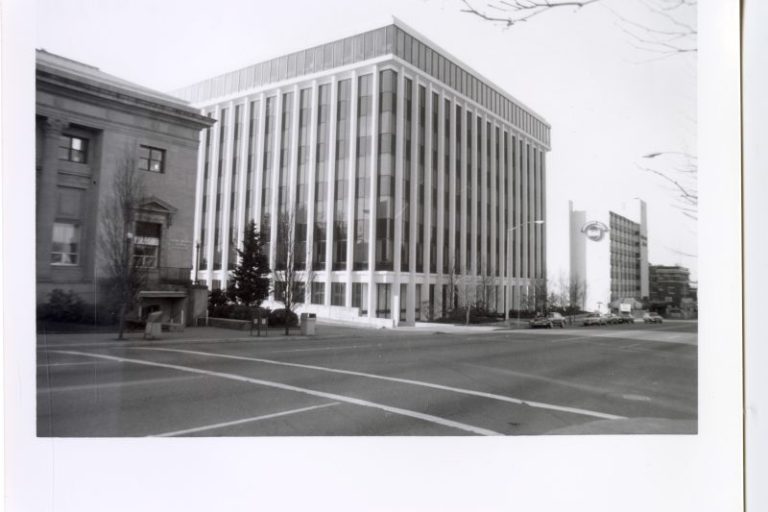
Throughout 2023 we’ll be exploring the origins of area place names. French Road in northwest Olympia is named for Charlotte Emily Olney French and her husband George French. Charlotte, pictured here, came to this area in the 1850s. An ardent supporter of female voting rights, Charlotte was one of the first women to vote in Washington Territory. After a series of reversals, female suffrage wasn’t permanently granted in Washington State until 1910, 10 years before the ratification of the 19th Constitutional amendment. Photograph selected and captioned by Deborah Ross on behalf of the Olympia Historical Society and Bigelow House Museum, olympiahistory.org.
Photo Courtesy Thurston County Historic Commission

Throughout 2023 we’ll be exploring the origins of area place names. The Bigelow neighborhood, Bigelow Park, and Bigelow Street are named for an early settler family. Pictured here is Ann Elizabeth White, who married Olympia attorney Daniel Bigelow in 1854. The Bigelows erected their home on the east side of Olympia around 1860. It is one of the oldest known residences in Olympia, currently operated as the Bigelow House Museum. Photograph selected and captioned by Deborah Ross on behalf of the Olympia Historical Society and Bigelow House Museum, olympiahistory.org.
Bigelow Photograph Collection, courtesy Olympia Historical Society and Bigelow House Museum

Throughout 2023 we’ll be exploring the origins of area place names. Giles Street, in northwest Olympia, takes its name from Charles Giles, whose home is at the corner of West Bay Drive and Giles Avenue. Charles Giles was a mill operator, whose business was nearby. The home is on the state register of historic places. Photograph selected and captioned by Deborah Ross on behalf of the Olympia Historical Society and Bigelow House Museum, olympiahistory.org.
Photograph of Charles P. Giles, around 1925, unknown photographer, Ancestry Public Member Photos & Scanned Documents, shared August 15, 2018

Throughout 2023 we’ll be exploring the origins of area place names. Henry Street in southeast Olympia is named for the Henry family. Anson Henry was a close friend of and physician to President Abraham Lincoln, who appointed him surveyor general for Washington Territory. Anson was visiting Richmond, Virginia, when Lincoln was assassinated, and helped Mary Todd Lincoln after the president’s death. The Henry heritage tree on the United Methodist Church grounds on Legion Way is named for Anson’s son Dudley. Photograph selected and captioned by Deborah Ross, Olympia Historical Society, olympiahistory.org.
public domain photo from 1860s

Throughout 2023 we’ll be exploring the origins of area place names. Langridge Avenue and Langridge Loop, in northwest Olympia, are likely named for the Langridge family. Father George, originally from England, arrived in this area in the mid 1800s. Pictured here are his three daughters, Alice, Frances, and Kate. Photograph selected and captioned by Deborah Ross on behalf of the Olympia Historical Society and Bigelow House Museum, olympiahistory.org.
Rogers Studio photo, about 1890, Courtesy State Capital Museum, Washington State Historical Society

Throughout 2023 we’ll be exploring the origins of area place names. Van Epps Street, in southeast Olympia, is likely named for the Van Epps family. The father, Theodore Van Epps, ran a stationery store, and later a real estate office. Pictured here is his daughter, Iva, with her good friend Ruth Allison, at Percival Creek. Theodore’s son, Arley, was the photographer. Photograph selected and captioned by Deborah Ross on behalf of the Olympia Historical Society and Bigelow House Museum, olympiahistory.org.
Photo by W.A. Van Epps, late 1800s, Courtesy State Capital Museum collection, Washington State Historical Society

Throughout 2023 we’ll be exploring the origins of area place names. Crosby Boulevard in Tumwater is named for the Crosby family. The Crosbys were early American settlers, arriving in Tumwater in 1851. Pictured here, third from left, is Nathaniel Crosby III, Tumwater merchant. The Crosby House in Tumwater, now a museum, was originally built by Nathaniel and his wife Cordelia Smith Crosby. Photograph selected and captioned by Deborah Ross on behalf of the Olympia Historical Society and Bigelow House Museum, olympiahistory.org.
Photo mid 1800s, Courtesy State Capital Museum collection, Washington State Historical Society

Throughout 2023 we’ll be exploring the origins of area place names. Mottman Road, Mottman Industrial Park, and the Mottman Mercantile Building at Fourth Avenue and Capitol Way are named for George Mottman, pictured here. He immigrated from Germany and came to Olympia in 1885. He began as a clerk at the Toklas and Kaufman Mercantile store, then bought them out and renamed the store. He was also involved in local politics and business. Photograph selected and captioned by Deborah Ross on behalf of the Olympia Historical Society and Bigelow House Museum, olympiahistory.org.
Prosser, History of the Puget Sound Country, 1903

Throughout 2023 we’ll be exploring the origins of area place names. Carlyon Avenue and Carlyon Beach are both named for the Carlyon family of southeast Olympia. Philip H. Carlyon was a dentist and his brother Fred a jeweler and real estate developer. Both men were city boosters and active in local politics. Pictured here is Philip. Photograph selected and captioned by Deborah Ross on behalf of the Olympia Historical Society and Bigelow House Museum, olympiahistory.org.

Throughout 2023 we’ll be exploring the origins of area place names. The town of Bucoda was once called Seatco, a Native American word meaning “ghost” or “devil.” In 1890, the name was changed to Bucoda for the first syllables of the businessmen who owned the coal mines in the area: James BUckley, Samuel COulter (pictured here) and John DAvid. Photograph selected and captioned by Deborah Ross on behalf of the Olympia Historical Society and Bigelow House Museum, olympiahistory.org.
Attribution: photo mid to late 1800s, Courtesy State Capital Museum collection, Washington State Historical Society

Throughout 2023 we’ll be exploring the origins of area place names. Ellis Cove in Squaxin Park is named for Isaac “Ike” Ellis, pictured here. Ellis was a logger, racetrack developer, and mayor of Olympia in territorial days. Photograph selected and captioned by Deborah Ross on behalf of the Olympia Historical Society and Bigelow House Museum, olympiahistory.org.
photo mid to late 1800s, Courtesy State Capital Museum collection, Washington State Historical Society

Throughout 2023 we’ll be exploring the origins of area place names. In 1970, a park was created on Capitol Lake’s western shore by placing fill material next to an existing railroad berm in the north basin of the lake. The park earned its current name, Marathon Park, when the City of Olympia won the right to host the U.S. time trials for the first Women’s Olympic Marathon, in 1984. The marathon route for the trials began and ended near the park. Photograph selected and captioned by Deborah Ross, Olympia Historical Society and Bigelow House Museum, olympiahistory.org.
1984 photo, Olympian archives

Throughout 2023 we’ll be exploring the origins of area place names. Pictured here is the Kinney family of South Bay, one of the two families for which Sleater-Kinney Road was named (contrary to what some may believe, the street name came before the band!) The family consisted of Henry and his wife Martha, and children Nellie and Ivan. Photograph selected and captioned by Deborah Ross on behalf of the Olympia Historical Society and Bigelow House Museum, olympiahistory.org.
photo around 1890s, Courtesy State Capital Museum collection, Washington State Historical Society

Throughout 2023 we’ll be exploring the origins of area place names. The American Legion was chartered by Congress in 1919 as a patriotic veterans organization, in support of World War I veterans. In honor of Olympia veterans’ service, Sixth Avenue was renamed Legion Way in 1927, and the Legion Way trees were planted in honor of veterans’ service in these and all wars. Pictured here are two Legion Way saplings, photographed around the time the trees were planted. Photograph selected and captioned by Deborah Ross on behalf of the Olympia Historical Society and Bigelow House Museum, olympiahistory.org.
Merle Junk photo, Washington State Archives, Susan Parish collection

Throughout 2023 we’ll be exploring the origins of area place names. Three creeks, a hill, a prairie, a heritage oak tree, and a street in Thurston County are all named for the Schneider family, early area settlers. Pictured here is Swedish-born Albertina Schneider, wife of Konrad Schneider. She was a long-time resident of West Bay Drive, where she and her children operated a farm and wharf at the foot of Schneider Hill. Photograph selected and captioned by Deborah Ross on behalf of the Olympia Historical Society and Bigelow House Museum, olympiahistory.org. Courtesy Ron Secrist, Schneider descendant

Throughout 2023 we’ll be exploring the origins of area place names. Sylvester Park is named for Olympia’s founder Edmund Sylvester. Born in Maine, he arrived here in 1846, along with his business partner Levi Smith. When Smith drowned in an accident, Sylvester inherited Smith’s claim to what is now the core of Olympia. He platted out the city and included a New England-inspired “town common” that was later re-named for its founder. Photograph selected and captioned by Deborah Ross on behalf of the Olympia Historical Society and Bigelow House Museum, olympiahistory.org.
Washington State Archives, State Library Photograph collection

Hazard Stevens, son of Washington Territory’s first governor, Isaac Stevens, was an investor in the Olympia Light and Power company that operated a hydroelectric facility at the Middle Tumwater Falls on the Deschutes River in Tumwater. Hazard fenced in the area below the falls and installed a menagerie of elk, swans, and bears, to attract visitors. Pictured here are some of elk with the falls in the background. Image selected and captioned by Deborah Ross on behalf of the Olympia Historical Society, olympiahistory.org.
Late 19th or early 20th century photograph, Courtesy State Capital Museum collection, Washington State Historical Society

Washington State and Olympia were in the forefront of the push for female suffrage in our state and nationally. Pictured here is prominent Olympian Bernice Sapp, while she was attending the National American Woman Suffrage Convention in 1909. Held in Seattle simultaneously with the Alaska-Yukon Pacific Exposition, it was a major event in the campaign for successful ratification of permanent voting rights for most Washington women in 1910, ten years before the national 19th amendment. Image selected and captioned by Deborah Ross, Olympia Historical Society, olympiahistory.org.
1909 photograph, Courtesy State Capital Museum collection, Washington State Historical Society

For many years the northwest corner of Third Avenue and Main Street (now State and Capitol) was occupied by a livery–a combination public stable, stagecoach, and carriage rental business. The first proprietor was Moses Rice Tilley, whose father Abram operated an early inn and stagecoach stop on the route between Olympia and Longview. The business operated under different owners until 1912, when the Old City Hall and Fire Station building (currently vacant) was erected here.
Susan Parish collection, Washington State Archives
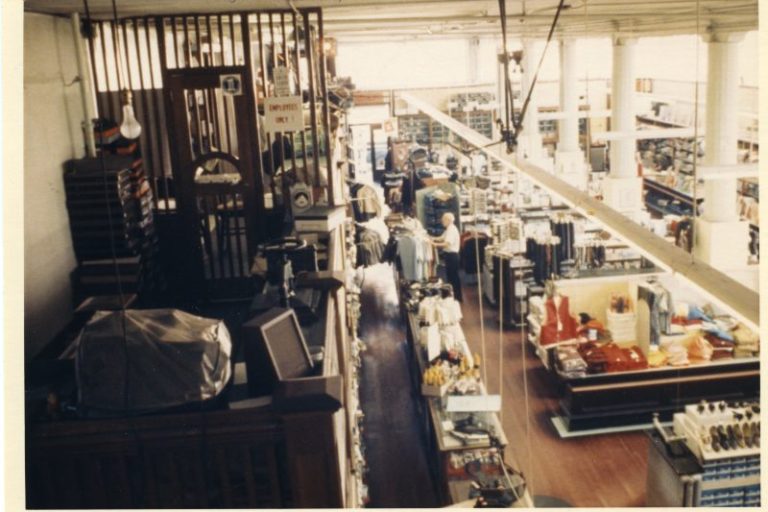
In 1914, photographer Robert Esterly took photographs of Olympia businesses and their owners. Pictured here is the Haskin and Peele shoe shop, located at 406 Fourth Avenue East (current site of the Clipper Café). The owners James Haskin and Robert Peele are likely two of the three men posing in front of the shop. Photograph selected and captioned by Deborah Ross on behalf of the Olympia Historical Society and Bigelow House Museum. For more information see olympiahistory.org.
Robert Esterly photograph, 1914, Courtesy State Capital Museum collection, Washington State Historical Society

The Columbia Hotel was built in the mid 1800s by early Olympia settler John Clark, at what is now 114 Columbia St. NW. At the time, it was on waterfront and popular with politicians, lobbyists, and travelers. The hotel was acquired by George Carlton and renamed the Carlton Hotel; later rebuilt and enlarged. The hotel lasted until at least 1940, though its status declined due to its proximity to the deteriorating Tenderloin District north of State. Image selected and captioned by Deborah Ross on behalf of the Olympia Historical Society, olympiahistory.org. Courtesy State Capital Museum collection, Washington State Historical Society

Fred Koepke was appointed Olympia’s motorcycle police officer in 1912. He was chosen in part for his familiarity with motorcycles and their repair. He’s pictured here in front of the Masonic Hall on Main Street (Capitol Way). His motorcycle was a Yale 7 HP (horsepower). Image selected and captioned by Deborah Ross on behalf of the Olympia Historical Society and Bigelow House Museum. For more information see https://olympiahistory.org.
: photograph taken around 1912, Courtesy State Capital Museum collection, Washington State Historical Society

The Olympia Motorcycle Club was formed in the early twentieth century as motorcycling took off as a popular activity for men and women alike. The group hosted races, outings, and social occasions such as dances. In this photograph, women are seated sidesaddle at the rear of the cycle while the cycles’ male drivers stand beside them. Other photographs of the time, however, show women behind the wheel as well. Photograph selected and captioned by Deborah Ross on behalf of the Olympia Historical Society and Bigelow House Museum, olympiahistory.org.
1913 photograph, Courtesy State Capital Museum collection, Washington State Historical Society

Pictured here are Nancy Scott Hunt Smith and her daughter, Mandana Smith Kimsey Bush. Mandana was a widow in Oregon when she married Tumwater resident William Owen Bush, son of settlers George and Isabella James Bush. W.O. Bush was a noted agriculturist and was Washington’s first Black legislator. Photograph selected and captioned by Deborah Ross on behalf of the Olympia Historical Society and Bigelow House Museum. For more information see olympiahistory.org.
Undated photograph, Washington State Archives, State Library Photograph collection

The Grand Army of the Republic (GAR) was a fraternal organization of Union veterans of the American Civil War. Later, their offspring formed the Sons of Union Veterans of the Civil War. The GAR and Sons of Veterans headquarters in Olympia was the former Central School building, then located at 200 Union Avenue (the building is now moved to the corner of Union and Adams). In this photo, uniformed Sons of Veterans members pose in front of the building. Image selected and captioned by Deborah Ross, olympiahistory.org.
undated photo, likely 1880-1900, Courtesy State Capital Museum collection, Washington State Historical Society

This painting of Kamilche, Washington settlers Benjamin Franklin Kennedy and his wife Elizabeth Ann Kennedy is based on a photograph that was taken of members of the extended Kennedy and Simmons families. The Kennedys were early settlers in Mason County: Kennedy Creek is named for the family. Image selected and captioned by Deborah Ross on behalf of the Olympia Historical Society, olympiahistory.org.
Painting based on a photograph from around 1900, Courtesy State Capital Museum collection, Washington State Historical Society

In 1901, Washington State purchased the Thurston County Courthouse, adjacent to Sylvester Park, to serve as the state’s Legislative Building. An annex to the original building was built to accommodate state government functions. This photograph from around 1902 shows the groundbreaking for the annex. Governor John R. Rogers is in front, wielding a ceremonial shovel. The building is now the office of the Superintendent of Public Instruction. Image selected and captioned by Deborah Ross on behalf of the Olympia Historical Society, olympiahistory.org.
photo about 1902, Courtesy State Capital Museum collection, Washington State Historical Society

Washington State produces the majority of hops grown in the United States. The crop, used in making beer, was first introduced in Western Washington by pioneer Ezra Meeker. Thurston County hop pickers pose in front of the crop in this photo from about 1889. Most hop pickers of that time were Native American and Chinese. Today, most commercial hops are produced in the Yakima area. Photograph selected and captioned by Deborah Ross on behalf of the Olympia Historical Society and Bigelow House Museum, olympiahistory.org.
Rogers Studio, around 1889, Courtesy State Capital Museum collection, Washington State Historical Society

This photograph of the Union Block, taken in 1894, dramatically illustrates how Olympia’s shoreline has changed over the years. The Union Block was located on Fourth Avenue between Chestnut and Cherry, approximately where City Hall is now. The building was perched on pilings over the Moxlie Creek estuary at that location.. Moxlie Creek now runs underground and empties into the eastern arm of Budd Inlet, where it meets Olympia Avenue. Photograph selected and captioned by Deborah Ross on behalf of the Olympia Historical Society and Bigelow House Museum, olympiahistory.org.
1894 photograph, Courtesy State Capital Museum collection, Washington State Historical Society

Francis Henry was an early Olympia settler. His cousin Anson Henry, a close friend and physician to Abraham Lincoln, also settled in Olympia. Francis Henry has lived on in posterity as the author of the song “The Old Settler,” sometimes called the unofficial folk song of Washington State, with its iconic line “surrounded by acres of clams.” Image selected and captioned by Deborah Ross on behalf of the Olympia Historical Society, olympiahistory.org.
late 1800 photo, Courtesy State Capital Museum collection, Washington State Historical Society

Philemon B. Van Trump was in the first party of European-Americans, in 1870, to summit Mount Rainier. He summited at least five other times, once guiding noted naturalist John Muir. When not at the mountain, he lived in Olympia and Yelm. In this photo from around 1911, he is shown here at Paradise Valley, holding his trusty alpenstock (hiking stick). Image selected and captioned by Deborah Ross on behalf of the Olympia Historical Society and Bigelow House Museum.
Photo about 1911, Courtesy State Capital Museum collection, Washington State Historical Society

The extended family of Benjamin and Agnes Mitchel Price poses proudly with their two automobiles, an REO or Red Wing, and a Winton Six, in this photo from about 1907. The Prices were among the first automobile owners in Olympia. The photograph was taken by Agnes Mitchel Price’s sister, Ida B. Smith. Agnes and Ida were both professional photographers. Photograph selected and captioned by Deborah Ross on behalf of the Olympia Historical Society and Bigelow House Museum. For more information see olympiahistory.org.
Ida B. Smith photo, about 1907, Courtesy State Capital Museum collection, Washington State Historical Society

Olympia Knitting Mills was an important contributor to Olympia’s economy in the early 20th century. The factory was located on 6th (Legion) Avenue between Jefferson and Cherry, and created woolen sportswear and outwear to be shipped throughout the United States and beyond. Pictured here are co-owner Sol Meyers and his crew in the winding room. Finished garments can be seen on shelves at the rear. The building still exists. Photograph selected and captioned by Deborah Ross on behalf of the Olympia Historical Society and Bigelow House Museum.
Photo around 1915, Courtesy State Capital Museum collection, Washington State Historical Society

In August 1902, the Woodmen of the World, a fraternal organization, held a carnival in Olympia. They sponsored a contest to name the Queen of the Carnival. Ruth Allison edged out Iva Van Epps for the honor. Here is Queen Ruth with her court, taken during the four-day event. This photo by Ida B. Smith was honored at the Northwest Photographers’ convention later that year. Image selected and captioned by Deborah Ross on behalf of the Olympia Historical Society, olympiahistory.org.
Ida B. Smith photo, August 1902, Courtesy State Capital Museum collection, Washington State Historical Society

This photo was taken in the late 1800s from the west side of Olympia. In the foreground is the elegant Percival Mansion. Below it is the Fourth Avenue Bridge that crossed the wide Deschutes Estuary, leading to downtown Olympia. The railroad track, with its depot at far left, linked Olympia to Tenino and access to the Northern Pacific Railroad. Image selected and captioned by Deborah Ross on behalf of the Olympia Historical Society and Bigelow House Museum.
photo late 1800s, Courtesy State Capital Museum collection, Washington State Historical Society

Pictured here, in a photo from the late 1800s, are the students and a faculty member at the Central School in Olympia, located at the corner of Union Avenue and Washington Street. The building still exists and is one of the oldest in the city: it was cut in two and moved to the corner of Union and Adams Street where it serves as an apartment complex. Photograph selected and captioned by Deborah Ross on behalf of the Olympia Historical Society and Bigelow House Museum. For more information see olympiahistory.org.
Photo, late 1800s, Courtesy State Capital Museum collection, Washington State Historical Society

The Van Epps family operated several businesses in downtown Olympia in the late 19th century. Pictured here is the T.C. Van Epps Real Estate office on Main Street (now Capitol Way). The building still exists and is currently the home of Browsers Bookshop. Photograph selected and captioned by Deborah Ross on behalf of the Olympia Historical Society and Bigelow House Museum. Photo late 1800s, Courtesy State Capital Museum collection, Washington State Historical Society