
Cultural History of the Olympia Oyster, by Ed Echtle
This article, written for the City of Olympia, was captured from the Wayback Machine and posted here for information purposes.
Introduction
 For millennia, the native people of Puget Sound relied on the Olympia Oyster as a key part of their food supply. Its abundance in South Sound gave the Squaxin people a valuable asset to share and trade with their neighbors and allies throughout the region.
When American settlers arrived on Puget Sound in the mid-1800s, they also depended on shellfish as a staple food. Very early on, Olympia Oysters became an export product, allowing the development of one of Washington’s most enduring industries.
Despite early overharvesting, environmental threats and political controversies, the Olympia Oyster remained an important cultural icon that continues to symbolize the area to the present. Its importance to the diverse peoples and natural environment of Washington throughout history makes its story key to understanding this place.
Natural History
 Ice Age glaciation over thousands of years shaped the inland waterways that comprise Puget Sound. When the last glaciers receded 11,000 years ago, the many channels left behind filled with seawater, allowing shellfish and other marine life to populate the inlets. Olympia Oysters are found from Alaska to Baja California.1 The numerous shallow bays of South Puget Sound provide…
Native Uses
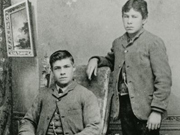 Local native peoples referred to the Olympia Oyster as “Kloch Kloch”. Ancient piles of discarded shells throughout south Puget Sound show the Olympia Oyster has always been a key part of native peoples’ diet in this region. At what is now Olympia, a Squaxin village called bəsčətxwəd meaning “a place that has bears” existed well into the 1850s. Located on the original shoreline on what is now…
American Settlement
 When American settlers first arrived in late 1845, it was too late in the season to plant crops so they relied heavily on shellfish. Andrew J Chambers, who arrived in 1847, recalled oysters were critical to settlers’ survival their first winters here.8 Thomas Prather recalled that in 1853, “There was a big band of Indians camped on the west side, coming to this side in canoes for the purpose of…
Early Oystering in Washington
 The first people to offer oysters for sale were natives. George Blankenship recalled native women harvested oysters in the mud flats around Olympia for sale or trade for clothing or other household goods.11 Gathering took place at low tide, day or night. Some natives built fires on sleds with iron tops to provide light and warmth as they harvested.12 Pioneer Olympia merchant Gustave Rosenthal recalled, “… oysters were sold only by Indian women, carrying a basket of a quarter bushel on their backs, supported by a strap across their foreheads.”13 Others remembered native women sitting along streets in Olympia with hand-woven baskets filled with oysters for sale. After the advent of automobiles and highways, some natives sold shellfish in hand-woven traditional baskets to tourists on the steps of the State Capitol building.14
Puget Sound Industry Beginnings
 Initially oysters growing in south Puget Sound were too remote to survive transport to California by sailing ship. As settlement of the northwest continued, demand for oysters increased in the region, especially in Seattle and Portland. By the 1860s entrepreneurs looked at South Puget Sound oysters as the next great extraction industry. To promote the idea, local press referred to the tidelands as “oyster mines.”19
Oystering Families
 The physical demands and round-the-clock schedule of oyster cultivation and processing made early shellfish enterprises family affairs. Squaxin families were among the first to enter the rapidly industrializing oyster business. The Charley, John, Jackson, Kettle, Krise, Simmons, Slocum, Tobin and Wohaut families not only harvested oysters on Eld, Totten and Little Skookum Inlets west of Olympia, they also filed official land claims as soon as they were able and constructed culling houses, floats and other structures and developed contracts with shippers as the industry developed.29
“Famous Oysters”
 How oysters found the length of the Pacific Coast of North America acquired the name “Olympia Oysters” remains unclear. While restaurants featuring local oysters in Olympia date nearly to the earliest settlement, it wasn’t until Captain Woodbury J Doane’s Oyster House opened in Olympia in the 1880s that “Olympia Oysters” gained wide notoriety.
Born in Maine, Doane went to sea as a young man. He arrived in California in time for the 1849 Gold Rush, but soon returned to work on steamboats in British Columbia during the Fraser River Gold Rush. After Doane relocated to Olympia, he opened his Oyster House Restaurant on the southwest corner of Fifth and Washington. Initially Doane and his sons raked, processed and cooked the oysters themselves; later he employed Chinese cooks.34 By the 1890s Doane’s Oyster House garnered a wide reputation as a must-visit eatery due his widely praised “Oyster Pan Roast.”
Industry Growth
 While small-scale processing happened at the oyster beds, companies including the JJ Brenner Oyster Co, Olympia Oyster Company and the Olympia Packing Co. built processing plants in Olympia, nearer to railroad and the port for shipping.41 The first, opened by Brenner in 1893, was located along Fourth Avenue west of downtown.42 Others soon followed choosing sites near Brenner’s and close to the recently completed Northern Pacific railroad station.43 Built before filling created land north of West Fourth Avenue, these structures were built on pilings, allowing boats to offload oysters directly to the processing plants.
Harvest and Processing
 The process of harvest and processing oysters changed little in more than a century. Oyster harvest takes place in nearly all weather conditions and much of the work is still best done by hand.48 In a 1974 interview Dick Helser, whose father began working oyster beds in 1878, described the harvesting process as cold, wet and exhausting, as harvest took place at low tide, day or night.49
Asian Labor & Families
 As the oyster industry expanded, need for outside labor increased. Like other industries, oyster producers turned to Chinese contract laborers beginning in the 1880s. In Olympia, several Chinese contracting companies including Hong Hai, Sun Wo, Hong Yek Kee and Quong Yuen Sang acted as brokers between companies and the laborers. During harvest these laborers resided in float-houses and bunkhouses near the oyster beds.
Changing Fortunes
 By the late 1800s, increased population and new industries around Budd Inlet impacted the Olympia Oyster population on Budd Inlet. Sewers drained directly into the bay and industrial waste made shellfish in Budd Inlet unsafe to eat.62 Meanwhile, extensive harbor dredging operations from the 1890s onward further decimated shellfish populations.
Even in the relatively unpolluted waters of the other inlets, unsustainable practices negatively affected oyster populations. Initially, harvesters took the best oysters and simply dumped young oyster “culls” on beach.63 Further, removal of shells degraded habitat necessary for oyster reproduction.64 Over time, harvesters adopted more sustainable practices, but other challenges followed.
The reduction of the Olympia Oyster populations led the industry to introduce non-native oysters to meet demands. As early as the 1890s, growers transplanted the Eastern Oyster to Willapa Bay. Larger and faster-growing than the Olympia Oyster, it was introduced to Puget Sound as well. In 1899 oyster growers also attempted to transplant Pacific Oysters from Japan. After several failed attempts it began proliferating locally by the 1920s, further displacing Olympia Oysters.65
Additionally, new species of predators arrived with the transplanted oysters including the Oyster Drill Snail. The comparatively slow growth of Olympia Oysters, coupled with its susceptibility to these new threats further accelerated the Olympia’s decline.66
In 1927 a wood pulp mill for paper production opened at Shelton. Soon after, waste “liquor” sulfites dumped into Puget Sound damaged shellfish populations in nearby inlets, especially the sensitive Olympia Oyster. Oyster growers sued the mill in 1931 and courts ordered the mill to dump its waste inland.67 However, sulfites continued to wash into Puget Sound. Public protests by oyster growers in Shelton against the mill were opposed by millworkers who pelted them with fruit.68
The prominence of the oyster industry made its leaders prominent community leaders as well. In 1932 pioneer oysterman Earl N Steele was elected Mayor of Olympia.69 During his term in office, the historic US Frigate Constitution visited Olympia as part of a tour of the Pacific Coast to raise funds for its preservation. The large celebration at Olympia included specially minted “Oyster Money” for use in town by visitors in the form of oyster-shaped tokens. Oyster Money was legal tender in Olympia during Constitution’s ten-day visit.70
By the end of the 1930s, the Olympia Oyster’s waning numbers, small size and sensitivity to pollution made it a tiny part of shellfish production on Puget Sound. However, rapid changes brought about by war and recovery in coming years set the stage for its return.
WWII and After
 Shortly after Japan attacked the Pearl Harbor naval base at Hawaii, US authorities barred all people of Japanese ancestry from the west coast. The War Relocation Authority sent Japanese at Olympia and Oyster Bay to the Tule Lake Relocation Center in northern California. During the war, the oyster industry hired white women to replace Japanese workers in the culling and opening plants.
Changing Tides
 As the industry grew, many native tideland owners’ families sold off their oyster beds to larger companies. However, natives continued shellfish gathering to supplement their incomes. Over the ensuing decades, property-owners increasingly blocked their access to natural beds on privately-owned tidelands.
By the 1950s and 1960s, northwest native peoples increased political agitation for enforcement of the 1850s treaties’ guarantee of “equal access” to gather food in “usual and accustomed places.” Northwest tribes engaged in a series of “fish ins” and other acts of civil-disobedience to demand their rights.
Stewardship and the Return of Olympia Oysters
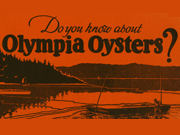 In recent decades, new influxes of immigrant workers filled the need for seasonal labor in the shellfish industry formerly the domain of Chinese and Japanese immigrants. Southeast Asians fleeing economic and political oppression in the 1970s and 1980s became an important workforce in the industry. More recently, Hispanic workers have become a key part of the shellfish industry…
More recently, Hispanic workers have become a key part of the shellfish industry labor pool and many now live and raise families in Mason and Thurston Counties.88


 The name currently given to the whole of the inland sea of Western Washington, originally named by Captain George Vancouver of the Royal Navy in honor of Lieutenant Peter Puget. Captain Vancouver sent Lieutenant Puget and a crew to survey the lower part of the sound in May 1792. Puget and his crew spent several days visiting nearly every cove and island in the region. To honor this work, Vancouver named the part of the sound south of the Tacoma Narrows for Puget. Vancouver named the northern part of the sound Admiralty Inlet.


 For nearly 90 years, the theater on South Washington Street in Olympia has served as a hub for entertainment, public meetings and social events. Originally built as the Liberty Theater in 1924, it reopened in 1985 after an extensive renovation as the Washington Center for the Performing Arts. Throughout its history, the theater’s programming reflected changing fashions in entertainments as well as the changing fortunes of Olympia’s downtown.
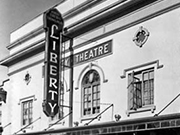 By the end of WWI, movies were a booming industry in the US. In the early 1920s, Olympia had two smaller movie houses, the Rex and the Ray. The Olympia Opera House, built in 1890 on East Fourth Ave. by newspaper pioneer John Miller Murphy, was becoming a relic of the past as its earlier grandeur faded with use and time. As 1920s audiences nationwide increasingly expected movie-going to be an elegant experience, competing entrepreneurs planned two new larger, more refined theaters to provide Olympia’s moviegoers with more luxurious facilities.
 The site of the new Liberty Theater was formerly the location of the Thomas Milburne Reed family home. Reed arrived in 1857 as a Wells Fargo agent, just a few years after Olympia’s founding. By the 1860s he was elected to the Washington Territorial Legislature where he served as speaker of the house in 1862-63. He later served in a number of appointed positions in Washington and Idaho Territories and won election to the legislature again in 1878-79, serving as president of the Council (Senate). Reed was also an astute businessman and developed the Reed business block adjoining his home in 1891 which housed Olympia’s post office until 1914.
 While feature films were the Liberty’s main offering, from early on, weekend matinees for children were a staple at the theater. Former Olympia Mayor Bill Jacobs recalled attending the Liberty as a child, to catch the weekly cartoon lineup billed as “Popeye Theater.” While vaudeville performances were becoming less fashionable, live performances in the theater continued in diverse forms.
 As Olympia entered the postwar years, Olympia’s theater owners prepared for increased numbers of moviegoers as servicemen and women returned to civilian life. Nearby, on Fourth Avenue, a third large downtown theater, The State, opened its doors in 1949. The State sported a modern neon marquee including a large backlit reader board. The Capitol Theater also added a similar lighted marquee trimmed in neon, to advertise its offerings and present a more modern façade.
 By the 1950s diffusion of state agencies to other cities in Washington created operational difficulties and legislators determined to reconsolidate government in the Olympia area. Washington State acquired property across Capitol Way from the legislative building and began construction of new office space on the site. In the process, the state demolished William Winlock Miller High School (known locally as Olympia High School) including its large 1000+ seat auditorium. Since its construction in 1919, the Olympia High auditorium served as the main large-capacity venue for local arts organizations and its loss left the Olympia area with no similar sized space for local productions.
 Since the loss of the Olympia High School Auditorium, local arts organizations vied for venue space. While the downtown theaters were capable of accommodating large crowds, their need to generate revenue for their owners often made their use expensive for local arts organizations with tight budgets. However, as competition from suburban movie venues and decreasing attendance caused downtown theaters to struggle for business, they became more affordable and local groups began using them more frequently.
 While demolition of the original theater interior got underway, the WCPA board began fundraising in earnest. In addition, the CAAC and the WCPA board held numerous meetings with local arts groups to determine their needs and develop an operations plan that would facilitate their use of the new theater. Meanwhile the design was taking shape. McCann enlisted acoustic experts Professor Yoichi Ando of Japan and his protégé Dennis Noson of Seattle to consult on the interior design to maximize its acoustic capabilities. WCPA was Ando’s first project in the US. He and Noson proposed an innovative trapezoidal space with hard surfaces to reflect and enhance sound from the stage.
 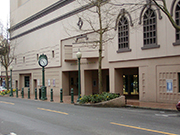 After the festivities of premier week, WCPA settled into the day-to-day business of providing the local performing arts venue its supporters envisioned. While nationally famous performers remained a regular part of programming, more local organizations, including Olympia Junior Programs (OJP,) began utilizing WCPA as well. Founded in 1940, OJP introduces South Sound youth to live theater through daytime matinees in partnership with school districts and was among the number of arts organizations displaced by the loss of the Olympia High School auditorium. Harlequin Productions, founded in 1990 by Linda and Scot Whitney, called the Black Box Theater home until they acquired the nearby State theater as their permanent home in 1997.
 In recent years the WCPA facility itself showed increasingly troublesome signs of age. By 2008 its artificial stucco exterior reached the end of its service life and required replacement. Since that time the City of Olympia undertook an extensive renovation of the facility including a new brick and stone exterior. The renovation began in April 2013 with workers replacing the roof, exterior, and the original mechanical systems.
 The Thurston County Medic 1 System was initiated in 1974. Through an Intergovernmental agreement, the Olympia Fire Department hired six paramedic firefighters. In 1976 an additional paramedic was hired to improve the supervision of the paramedics. In 1988 an eighth paramedic was hired to comply with the reduction in work hours required by the Fair Labor Standard Act. In 1993 a ninth paramedic was hired to balance the three shifts and eliminate the need for paramedics to float. The Westside SPRINT unit was opened in 2000, and four paramedics were hired due to lengthening response times in the Northwest portion of the county. Following the earthquake, February 28, 2001, the SPRINT unit was temporarily converted to a full medic unit due to the closure of the 4th Avenue bridge. In January 2002 Medic 10 was changed from a temporary status to a permanent status and 3 additional paramedics were hired. At this time Olympia Fire Department currently employs 18 field paramedics, three of which are Paramedic Lieutenants.
 The fleet was the lifeblood of the community and commerce that launched the Pacific Northwest. Steamer schedules governed daily lives, and the whistle of an approaching boat was the call to collect the mail, greet friends, or send a package. To ride on a steamboat was an occasion, a chance to visit and enjoy the leisurely, often long passage to the city. Old-timers recall the smooth, gleaming wood on the passenger cabins, the box lunches en route, and the fact that, for a child, the journey enlarged the world.
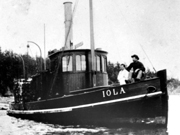


 The Mosquito Fleet era ended as customers switched their allegiance to cars and paved highways. The traditional design of the steamers were outmoded, too, as newer boats came down the ways with gasoline or diesel motors instead of steam, propellers instead of paddle wheels, and steel instead of wooden hulls. To survive, the fleet tried to adapt, the larger boats finding new life as ferries, the smaller ones as tugboats, freighters, or excursion boats. Ultimately, they did not endure. By the 1920’s, car ferries were taking over, and passenger-only patronage was declining. By the 1930s, they were gone.

 Born in Galena, Illinois, January 27, 1827, Francis Henry was the first white child born in Galena. His parents, William and Rachel (McQuigg) Henry, were natives of New York and Connecticut respectively. His father took an active part in the War of 1812, being a Lieutenant of Artillery, and was one of the first settlers of Galena in 1825, where he engaged in the mercentile business. In 1836, William Henry moved with his family to Mineral Point, Wisconsin, where he passed the remainder of his days.
 Started from Pittsfield, Illinois by ox team, date 1849. Arrival on coast at Oregon City, Oregon Territory in 1849. Incidents on way: The ox team “gave out,” the party divided and Mr. McElroy and another man (name unknown) came on to Oregon City. The original desitnation was California, where Mr. McElroy went by sea in a sailing vessel (Barque Diamond, Capt. Reynard) in October and November 1849. Companions in party: Norton Bates (brother-in-law), others unknown.